
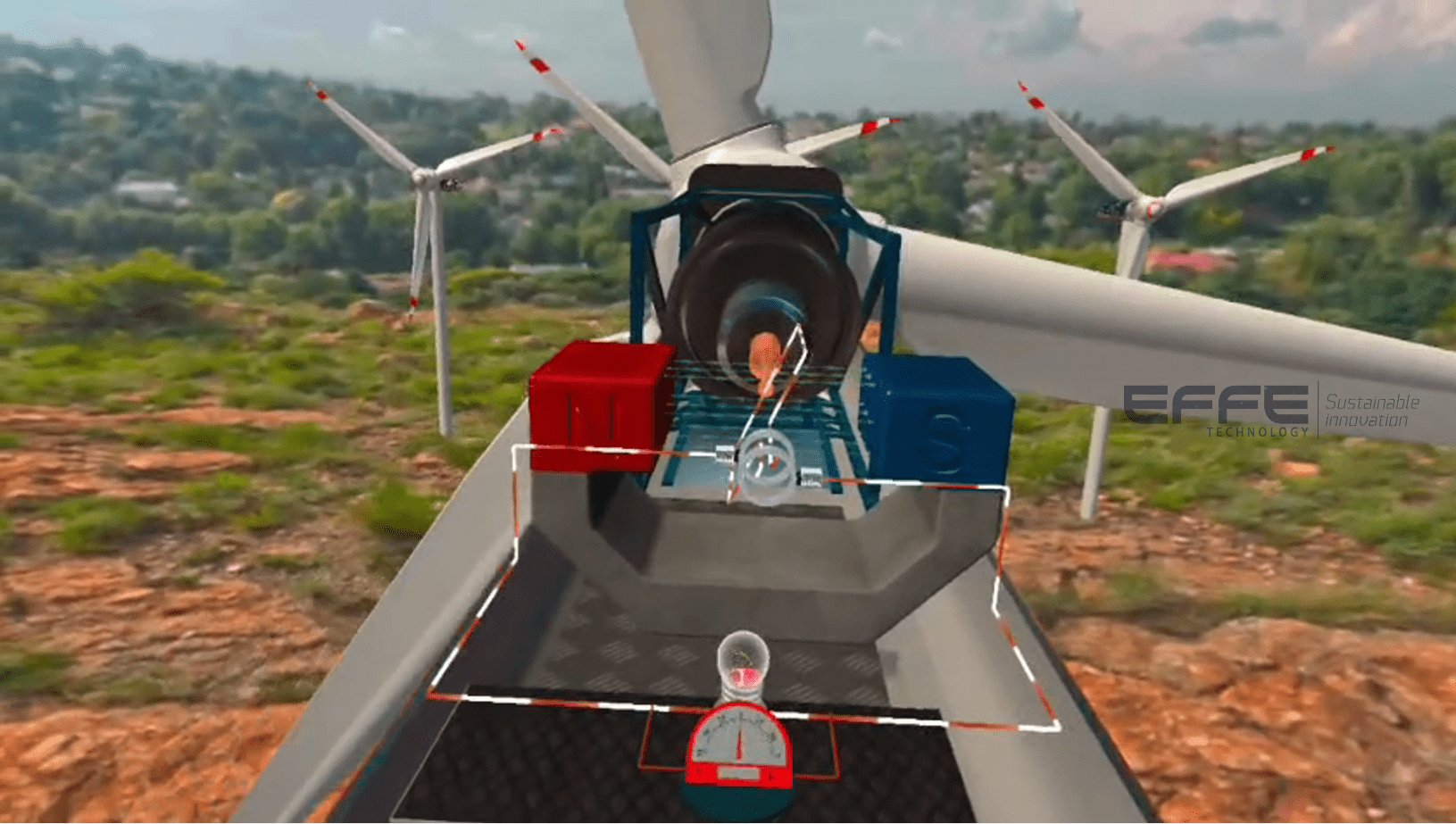
Overview
Understanding how electricity is generated is a fundamental concept in physics, yet many students struggle to grasp it through static diagrams and theoretical explanations. Traditional classroom methods often lack the interactivity needed to visualize electromagnetic principles in action. This case study highlights how an AC generator VR simulation for students transformed physics education into an immersive, engaging, and concept-driven learning experience.
By integrating an AC generator VR simulation for students with a web-based platform, learners were able to explore how mechanical energy converts into electrical energy in real time. Instead of memorizing formulas, students experienced the working principle through interactive environments, making VR physics learning for K12 students more intuitive and effective. This approach improved concept clarity, engagement, and long-term retention.
Project Requirement
The client aimed to modernize physics education by implementing a scalable AC generator VR simulation for students that supports both classroom and remote learning.
Key requirements included:
- Immersive AC generator VR simulation for students with real-time interaction
- Step-by-step visualization of electromagnetic induction
- Integration with an AC generator web based simulation for students
- Interactive modules for hands-on experimentation
- Compatibility across VR headsets, desktops, and browsers
- Easy-to-use interface for students and teachers
The goal was to enhance VR physics learning for K12 students while providing schools with a flexible and scalable digital lab solution.
Project Planning
Planning focused on aligning the simulation with K–12 physics curriculum and ensuring accessibility for diverse learning environments. Physics educators, instructional designers, and VR developers collaborated to build a system that simplifies complex concepts without compromising accuracy.
Planning activities included:
- Mapping AC generator concepts into structured learning modules
- Designing intuitive interactive AC generator simulation for school students
- Developing web-based access for wider reach
- Creating engaging UI/UX for student-friendly navigation
- Ensuring scalability for classroom deployment
This ensured that the AC generator VR simulation for students was both educationally effective and easy to implement.
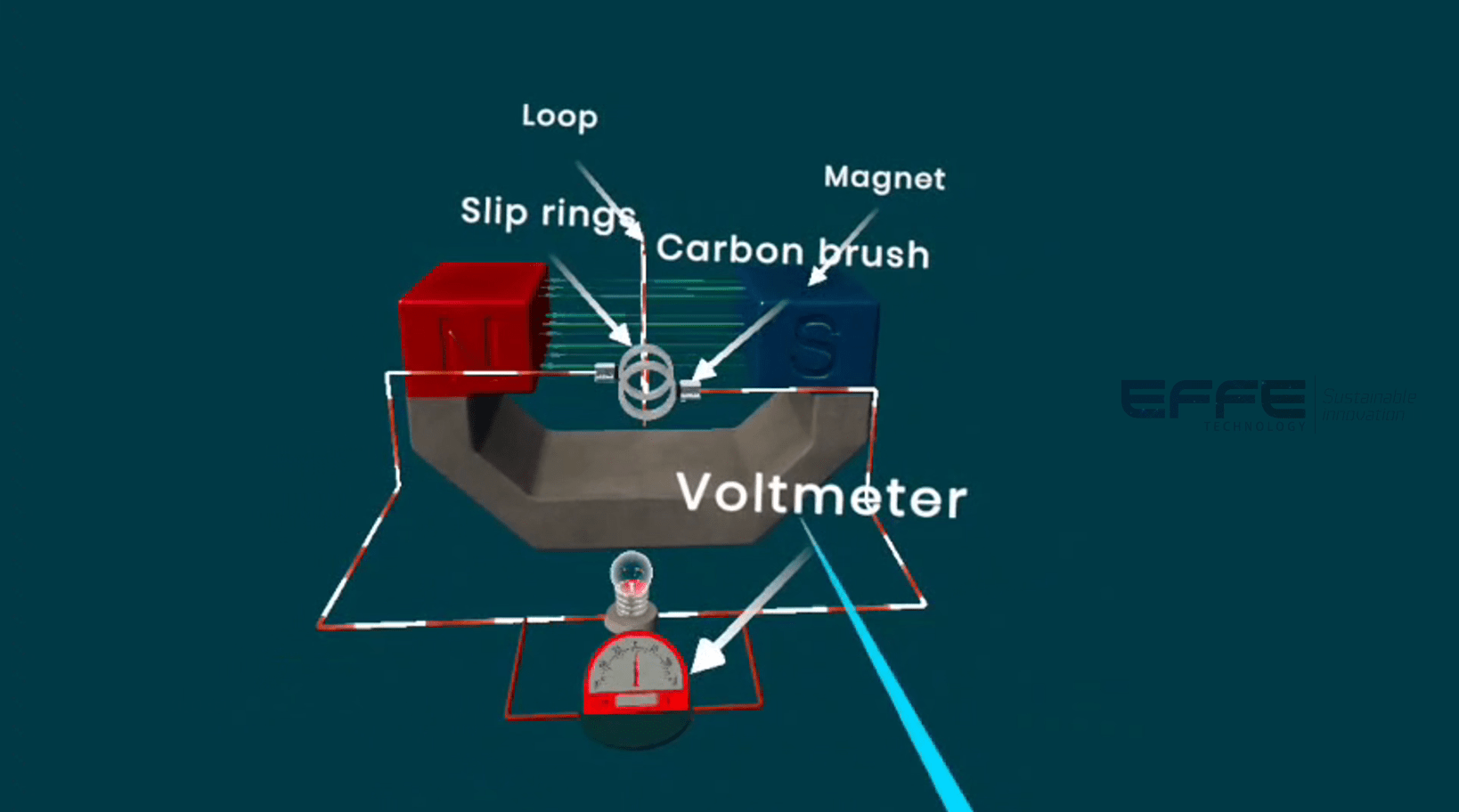
Project Process & Execution
The execution phase involved building high-fidelity 3D models of AC generators and simulating real-world physics processes. The AC generator VR simulation for students allowed learners to interact with components such as coils, magnets, and rotating systems to understand electricity generation.
Through the platform, students could:
- Explore the working of generators in immersive VR
- Perform experiments using an AC generator web based simulation for students
- Engage in interactive AC generator simulation for school students for hands-on learning
- Visualize energy conversion processes step by step
- Strengthen understanding through VR physics learning for K12 students modules
The dual approach of VR and web ensured accessibility for schools with varying infrastructure, making learning inclusive and scalable.
Challenges & Learning
- Concept Simplification: Complex electromagnetic concepts were visually simplified
- User Adoption: Intuitive design improved engagement for both students and teachers
- Performance Optimization: Ensured smooth experience across devices
- Scalability: Platform designed for multiple classrooms and institutions
These insights strengthened the effectiveness and usability of the AC generator VR simulation for students.
Client Deliverables
- Full-scale AC generator VR simulation for students platform
- Integrated AC generator web based simulation for students
- Interactive modules for VR physics learning for K12 students
- Hands-on interactive AC generator simulation for school students
- Cross-platform compatibility (VR + Web)
- Scalable deployment for schools and EdTech platforms
Conclusion
This project demonstrates how an AC generator VR simulation for students can redefine physics education by making abstract concepts interactive and engaging. By combining immersive VR with an AC generator web based simulation for students, the solution delivers a practical, safe, and scalable learning experience.
Students gain deeper understanding and confidence, teachers benefit from structured teaching tools, and institutions adopt future-ready digital labs. With VR physics learning for K12 students, traditional physics education evolves into an experiential, technology-driven journey—built on trust, clarity, and measurable learning outcomes.