
Overview
Aviation education requires more than classroom instruction to prepare students for real-world industry environments. Understanding airport operations, passenger interactions, aircraft cabin procedures, and aviation workflows can be challenging when learning is limited to textbooks and presentations. Aviation institutes increasingly seek innovative learning solutions that provide practical exposure while maintaining a safe and controlled training environment.
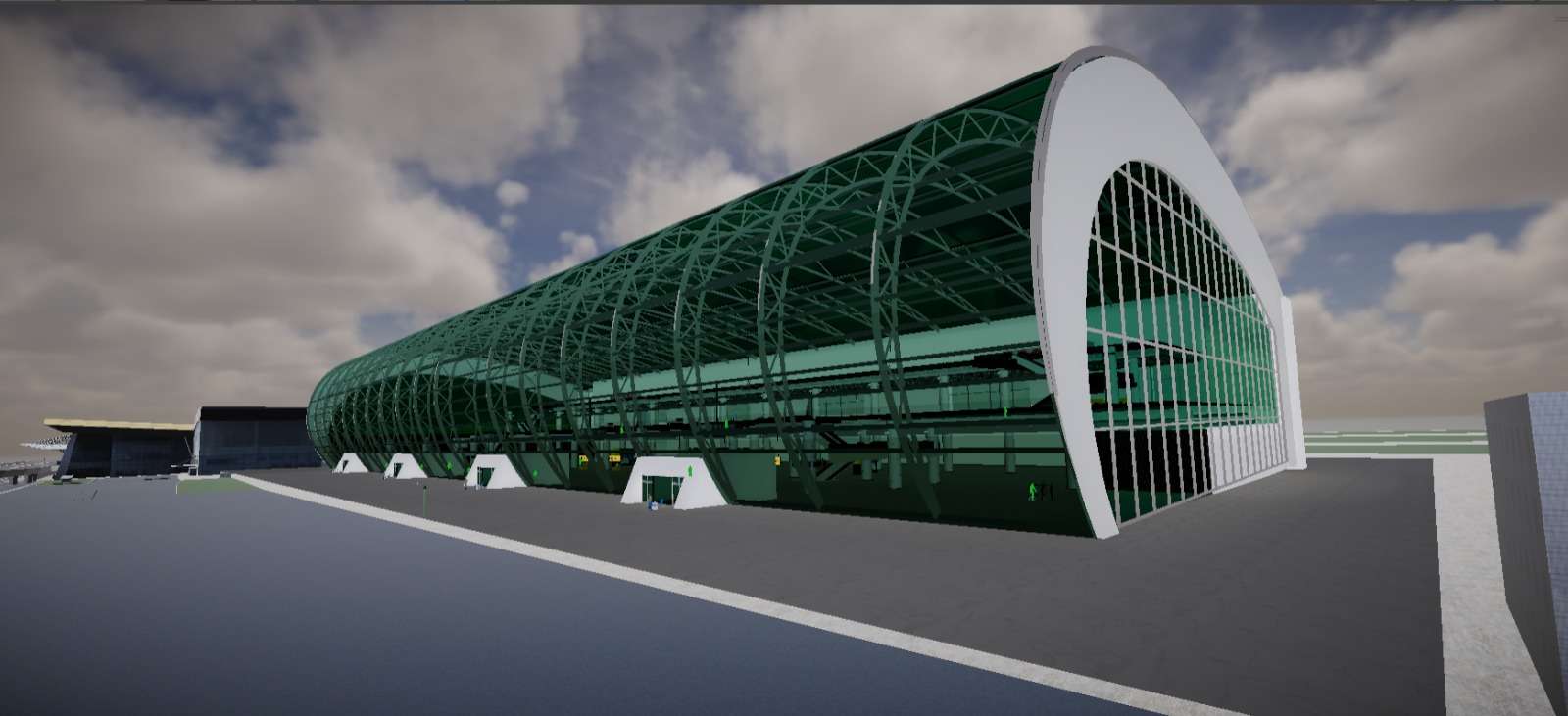
To address this challenge, we developed a VR aviation walkthrough for a commercial aviation training institute, enabling students to experience realistic aviation scenarios through immersive virtual reality technology. The solution combines a detailed airport terminal virtual walkthrough, interactive learning modules, and an engaging aircraft cabin VR experience that allows learners to explore aviation environments before entering real-world operations.
Designed as a comprehensive commercial aviation simulation, the platform helps students understand airport processes, passenger movement, cabin operations, and aviation workflows through experiential learning. By integrating virtual reality aviation training into the educational process, the institute can deliver more engaging, practical, and effective training experiences that improve student understanding and knowledge retention.
Project Requirement
The client, a commercial aviation training institute, wanted to enhance its learning programs by providing students with practical exposure to aviation environments without requiring access to live airport facilities.
Key requirements included:
- A realistic VR aviation walkthrough for aviation students
- An immersive commercial aviation simulation environment
- Detailed airport terminal virtual walkthrough experiences
- Interactive aircraft cabin VR experience modules
- Support for virtual reality aviation training programs
- Realistic passenger handling and aviation workflow scenarios
- A scalable platform for future training enhancements
The goal was to create a learning solution that bridges the gap between theoretical education and real-world aviation operations.
Project Planning
Before development began, we worked closely with the institute to understand the learning objectives of commercial aviation students. The focus was not simply on visualization but on creating an educational experience that helps learners understand operational procedures and aviation environments.
The project was planned as a comprehensive virtual airport and aircraft visualization platform where students could explore airport terminals, passenger service areas, boarding processes, and aircraft interiors. Each learning area was carefully designed to support aviation education while maintaining a realistic representation of commercial aviation environments.
Our strategy focused on creating a structured aviation training simulation that allows students to learn through observation, exploration, and scenario-based experiences.
Project Process & Execution
1. Airport Environment Development
We developed a detailed airport terminal virtual walkthrough that replicates important airport areas, including check-in counters, waiting zones, boarding gates, passenger circulation spaces, and operational areas. This environment helps students understand airport layouts and passenger flow management.
2. Aircraft Cabin Experience Design
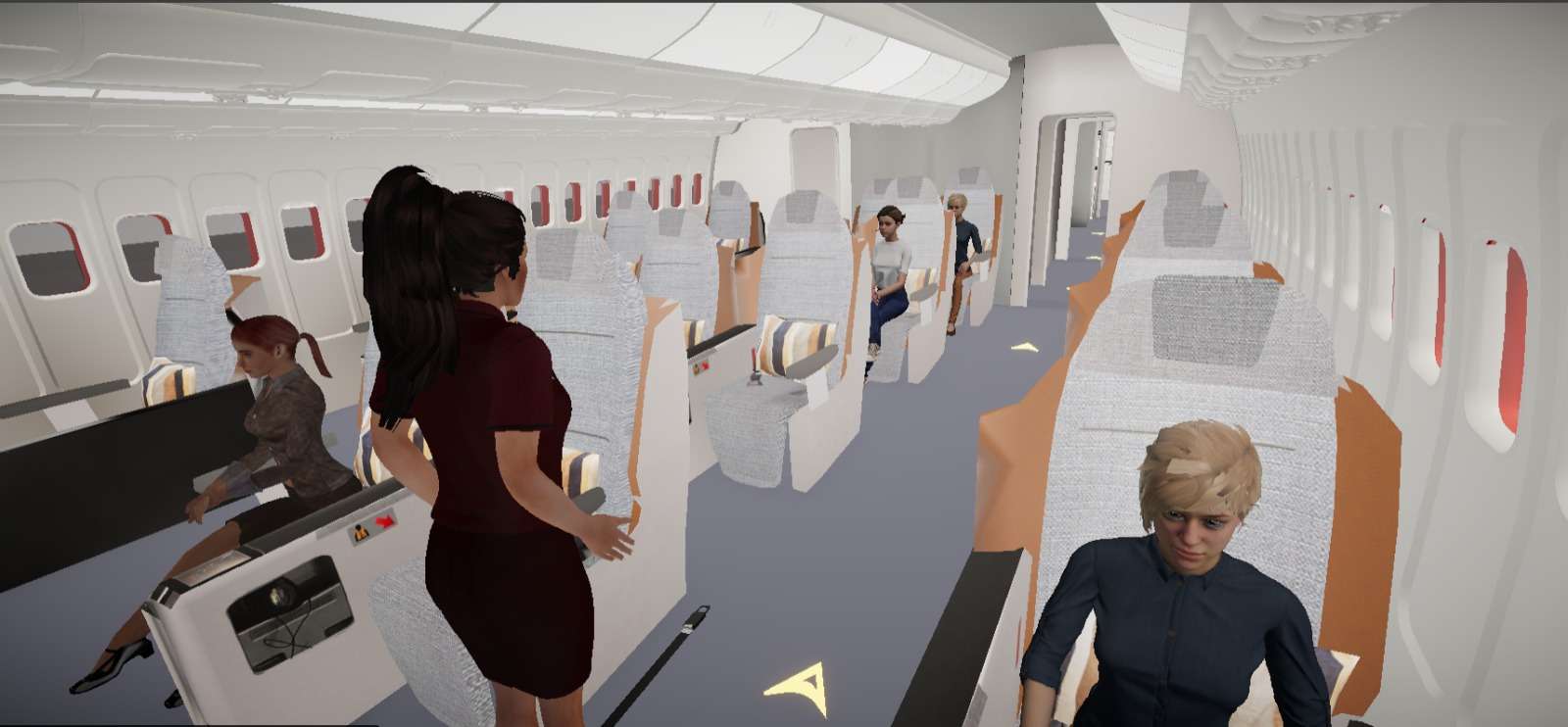
To enhance aviation learning, we created a realistic aircraft cabin VR experience that enables students to explore cabin layouts, seating arrangements, passenger interactions, and onboard procedures. This provides valuable exposure to cabin operations in a virtual environment.
3. VR Aviation Training Integration
The platform was designed to support VR commercial aviation training by combining airport and aircraft experiences into a unified learning system. Students can navigate through various aviation environments and gain a deeper understanding of industry practices.
4. Simulation & Optimization
The complete commercial aviation simulation was optimized for smooth performance while maintaining visual quality and realism. The solution ensures a seamless learning experience across supported VR devices.
Challenges & Learning
Developing an effective aviation training platform required balancing educational value with realistic simulation.
Key challenges included:
- Creating realistic airport and aircraft environments
- Ensuring smooth navigation within large virtual spaces
- Designing educational experiences that support learning objectives
- Maintaining visual quality while optimizing performance
- Simulating aviation workflows in a user-friendly manner
These challenges strengthened our expertise in developing immersive training solutions for educational institutions.
Client Deliverables
- Complete VR aviation walkthrough
- Realistic commercial aviation simulation
- Detailed airport terminal virtual walkthrough
- Interactive aircraft cabin VR experience
- Integrated virtual reality aviation training environment
- Scalable virtual airport and aircraft visualization platform
- Optimized deployment for VR learning programs
Conclusion
The VR aviation walkthrough successfully transformed how commercial aviation students engage with aviation education. By combining realistic airport environments, aircraft cabin exploration, and immersive aviation training simulation, the solution provides students with valuable exposure to real-world aviation operations.
Through virtual reality aviation training, learners can experience airport processes, passenger interactions, and cabin environments in a safe and engaging setting. The platform serves as an advanced aviation virtual tour and learning solution that enhances understanding, improves knowledge retention, and supports the institute’s mission of preparing students for successful careers in the aviation industry.
As a result, the institute gained a powerful educational tool that delivers practical learning experiences while modernizing aviation training through immersive technology.