
Overview
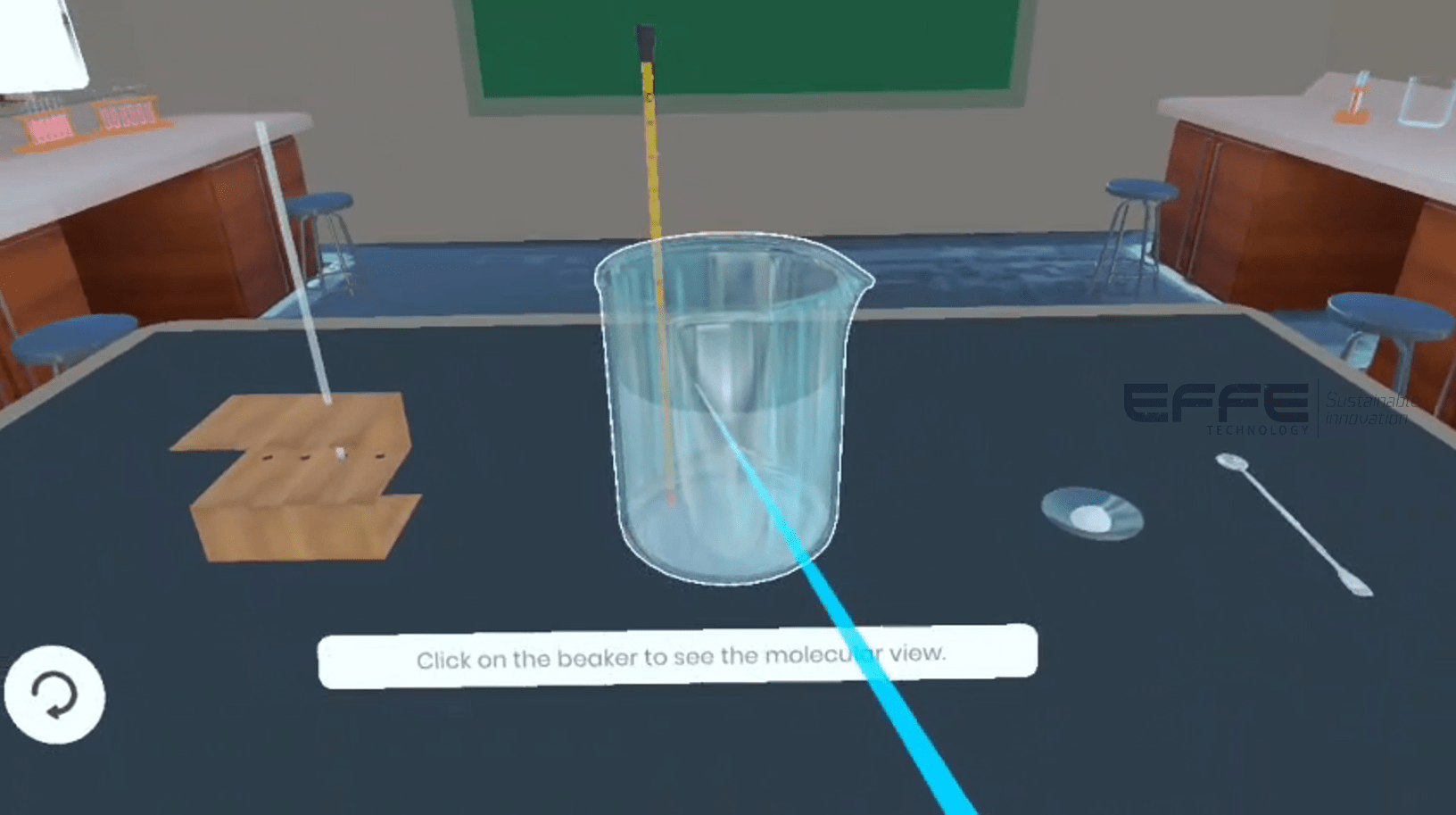
Understanding chemical reactions, especially decomposition reactions, can be challenging for students when taught through static textbooks and limited lab access. Traditional methods often fail to provide clear visualization, hands-on experience, and consistent engagement. This case study highlights how a VR decomposition reaction simulation for students transformed chemistry learning into an immersive, interactive, and highly engaging educational experience.
By integrating a VR decomposition reaction simulation for students with a web-based chemistry lab, the solution enabled learners to visualize molecular breakdown processes in real time. Students no longer relied solely on imagination—they could explore reactions step by step in a safe, controlled virtual environment. This approach significantly improved concept clarity, retention, and student confidence, making VR chemistry learning for K12 students more effective and accessible.
Project Requirement
The client aimed to modernize chemistry education by developing a scalable VR decomposition reaction simulation for students that could be used across classrooms and remote learning environments.
Key requirements included:
- Immersive VR decomposition reaction simulation for students
- Interactive modules explaining reaction processes step by step
- Integration with a virtual lab for school chemistry for web-based access
- Safe, repeatable experiments without physical lab risks
- Real-time interaction and guided learning for students
- Compatibility across VR headsets, desktops, and browsers
The focus was to create a solution that enhances both VR chemistry learning for K12 students and institutional teaching efficiency.
Project Planning
The planning phase focused on aligning educational content with curriculum standards and student learning behavior. Chemistry educators, instructional designers, and VR developers collaborated to build a system that balances engagement with academic accuracy.
Planning activities included:
- Mapping decomposition reaction concepts for K–12 curriculum
- Structuring modules for VR decomposition reaction simulation for students
- Designing intuitive interfaces for easy navigation
- Integrating virtual lab for school chemistry features for accessibility
- Ensuring scalability for classroom and remote learning use
This ensured the platform delivered both educational value and ease of adoption.
Project Process & Execution
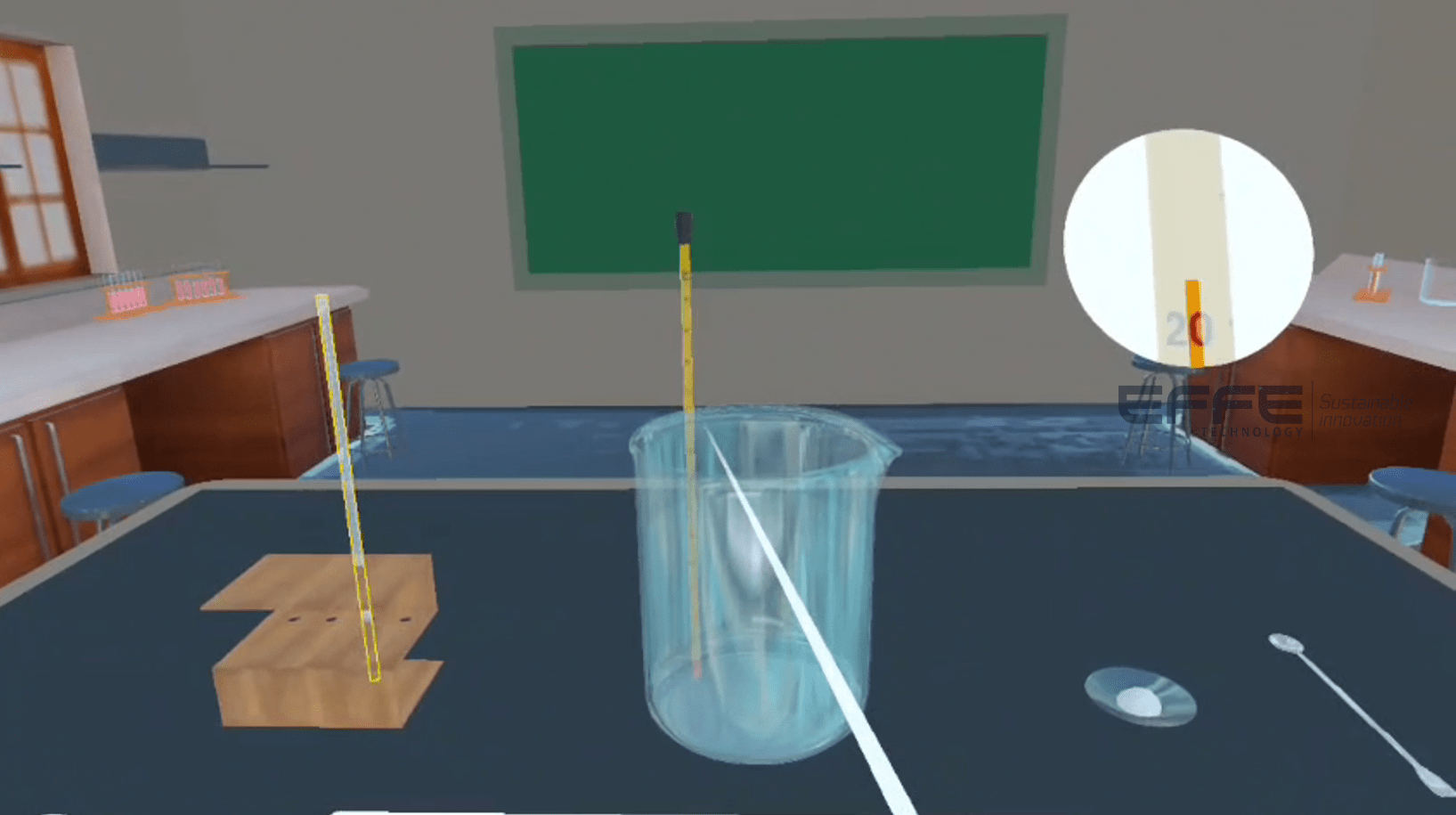
The execution phase involved building high-quality 3D molecular models and interactive simulations that demonstrate decomposition reactions in detail. The VR decomposition reaction simulation for students allowed learners to observe chemical changes, interact with elements, and understand cause-and-effect relationships.
Through the platform, students could:
- Explore reactions in immersive VR environments
- Perform experiments in a virtual lab for school chemistry
- Learn through guided and self-paced modules
- Visualize molecular breakdown processes clearly
- Reinforce concepts using VR chemistry learning for K12 students modules
The web-based component ensured that even schools without VR hardware could access the same high-quality learning experience.
Challenges & Learning
- Concept Simplification: Complex reactions were simplified visually for better understanding
- User Adoption: Intuitive design helped both students and teachers adapt quickly
- Performance Optimization: Ensured smooth experience across devices
- Scalability: Platform designed for multiple classrooms and institutions
These learnings enhanced the reliability and effectiveness of the VR decomposition reaction simulation for students.
Client Deliverables
- Full-scale VR decomposition reaction simulation for students platform
- Interactive virtual lab for school chemistry (web-based)
- Structured VR chemistry learning for K12 students modules
- Real-time interaction and guided experiment features
- Cross-platform compatibility (VR + Web)
- Scalable deployment for schools and institutions
Conclusion
This project demonstrates how a VR decomposition reaction simulation for students can redefine chemistry education. By combining immersive VR with a virtual lab for school chemistry, the solution delivers safe, engaging, and concept-driven learning experiences.
Students benefit from improved understanding and confidence, teachers gain a reliable teaching tool, and institutions adopt a scalable digital learning solution. With VR chemistry learning for K12 students, traditional chemistry education evolves into an interactive, future-ready experience—built on trust, clarity, and measurable learning outcomes.