
Overview
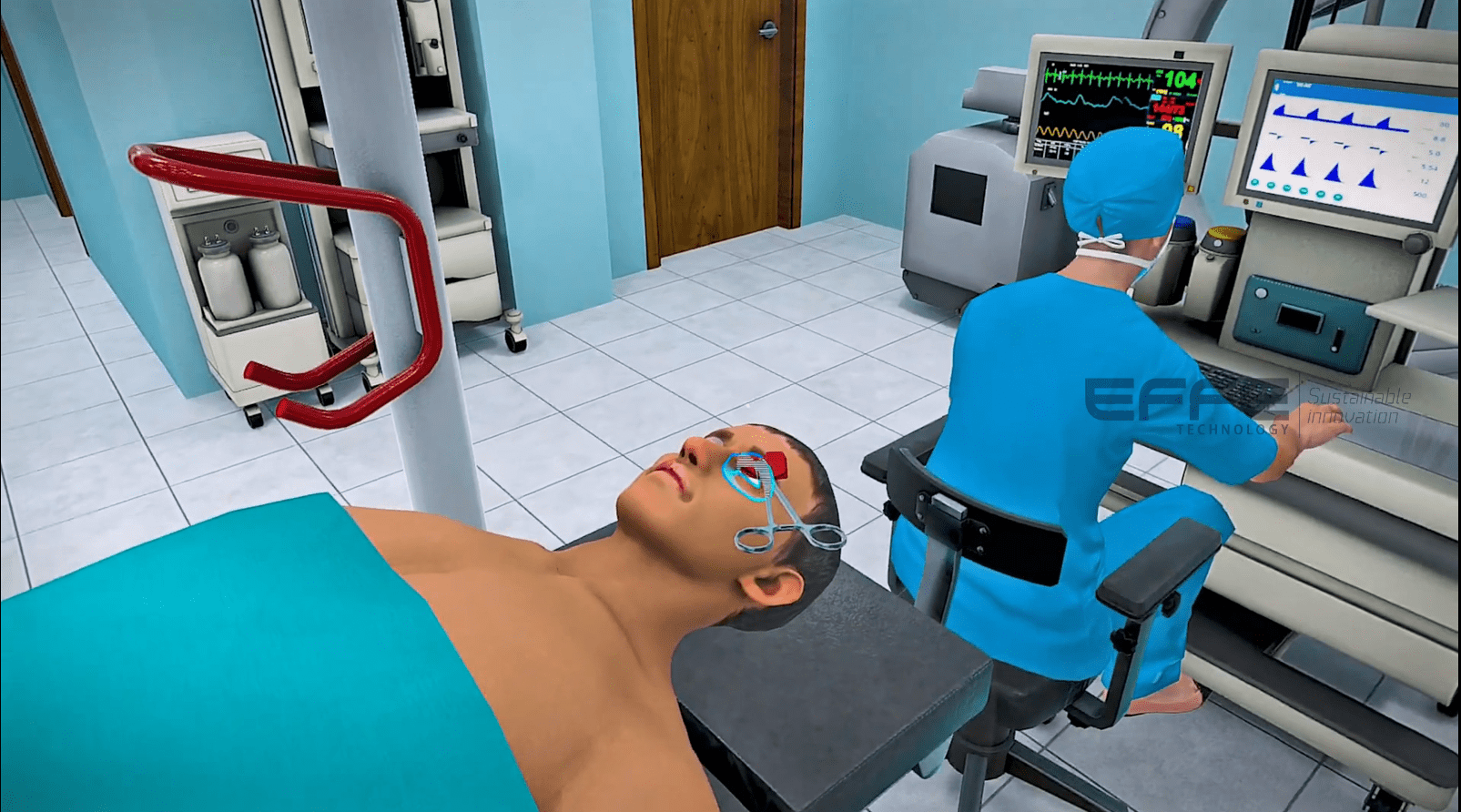
In high-precision specialties like ophthalmology, surgical accuracy determines patient outcomes. Traditional observation-based learning and cadaver practice often limit exposure to complex cases. To bridge this gap, we developed a VR Surgery in Ophthalmology training platform designed for hospitals, vision care centers, and surgical training institutes.
This immersive system combines real-world 3D eye anatomy, live procedural simulation, and interactive decision-making to create a safe yet realistic surgical rehearsal environment. Built specifically for the Healthcare & Hospital Industry and Ophthalmology & Vision Care Centers, the solution enables surgeons and residents to master procedures with confidence before entering the OT.
Project Requirement
The client required:
- A clinically accurate VR Surgery in Ophthalmology training system
- Realistic ophthalmic anatomy VR simulation with layered eye structures
- Step-by-step surgical rehearsal modules (Cataract, LASIK, Retina procedures)
- Error-based learning and complication management scenarios
- A scalable platform for medical universities and surgical training institutes
Their primary objective was to improve surgical preparedness, reduce training risk, and standardize skill development across departments.
Project Planning
Our team collaborated with ophthalmic surgeons, retina specialists, and academic faculty to design the learning architecture.
We structured the VR Surgery in Ophthalmology platform into three core modules:
- Interactive Eye Anatomy Module – A high-fidelity ophthalmic anatomy VR simulation allowing users to explore cornea, retina, lens, optic nerve, and vascular layers in 360°.
- Procedure Simulation Module – Guided and unguided surgery modes for Cataract, Refractive, and Vitreoretinal procedures.
- Performance Analytics Dashboard – Real-time tracking of precision, instrument handling, incision accuracy, and complication response.
The focus was to make VR Surgery in Ophthalmology not just visually immersive, but clinically reliable and measurable.
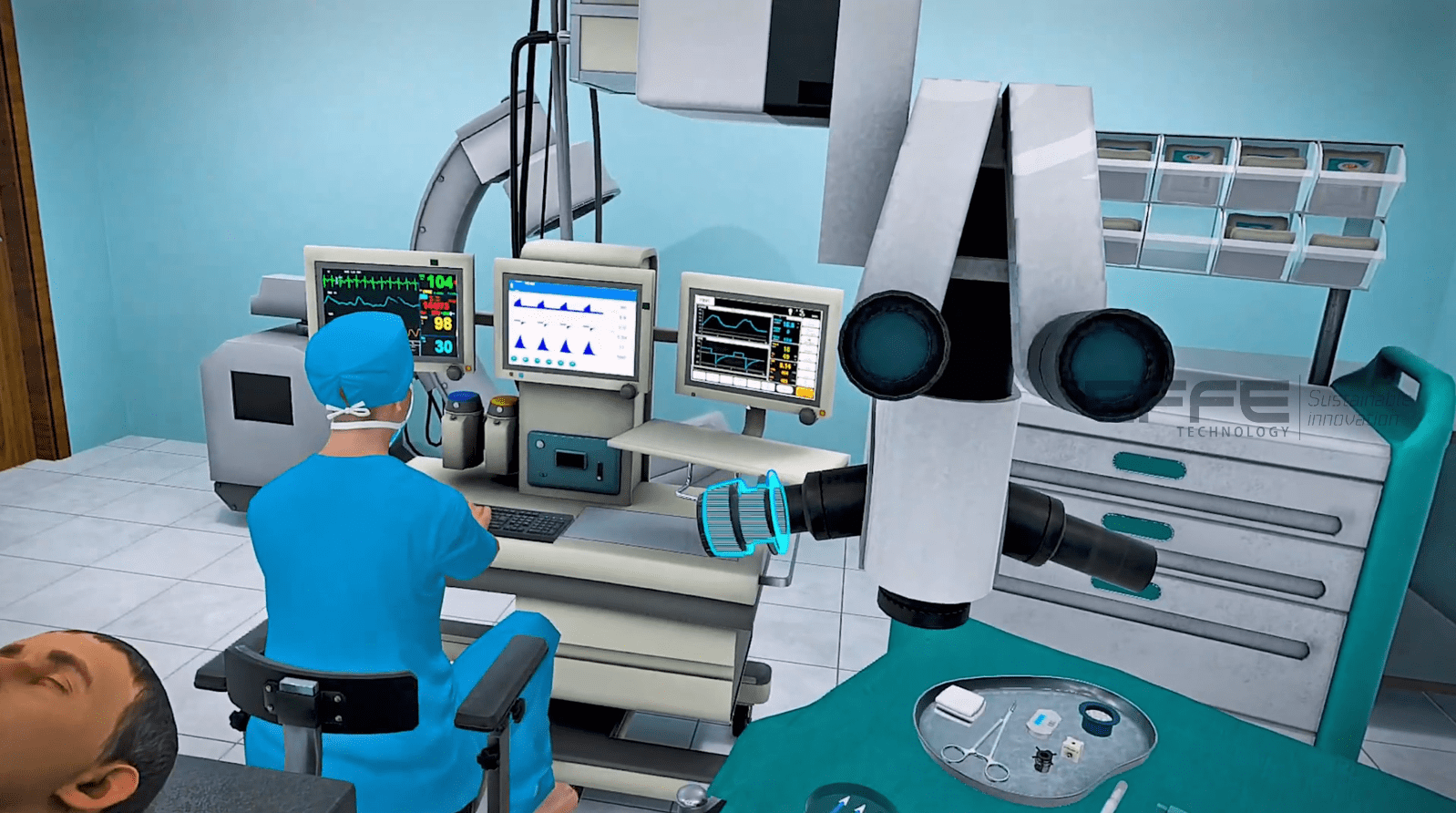
Project Process & Execution
We developed ultra-detailed 3D models based on real surgical references and anatomical datasets. The ophthalmic anatomy VR simulation included micro-level details such as zonules, macular region mapping, and anterior chamber dynamics.
The VR Surgery in Ophthalmology workflow replicated:
- Microscope-based visualization
- Instrument tracking and haptic feedback logic
- Fluid dynamics simulation during phacoemulsification
- Real-time complication scenarios (capsule rupture, retinal tear)
To ensure authenticity, surgeons tested each build iteration. Their feedback refined incision angles, instrument physics, and tissue response simulation.
The final system allows users to rehearse repeatedly—making VR Surgery in Ophthalmology a practical alternative to risk-based learning.
Challenges & Learning
Precision at Micro-Level
Simulating delicate ophthalmic tissues in a digital environment required advanced rendering and physics tuning. Achieving accurate lens fragmentation behavior and retinal sensitivity was a major technical milestone.
Clinical Validation
Maintaining medical credibility was critical. Every layer of the ophthalmic anatomy VR simulation was reviewed by experts to ensure anatomical accuracy.
User Trust & Adoption
For hospitals to trust a VR Surgery in Ophthalmology system, it had to demonstrate measurable training improvement. We integrated assessment reports and performance analytics to build institutional confidence.
Client Deliverables
- Fully immersive VR Surgery in Ophthalmology platform
- High-fidelity ophthalmic anatomy VR simulation module
- Multi-procedure surgical rehearsal system
- Instructor dashboard & trainee performance reports
- Multi-user scalability for training centers
- Deployment support & onboarding training
Similar Projects
We have also developed advanced surgical rehearsal platforms similar to this approach, including immersive VR surgical systems showcased in our previous simulation deployments.
Conclusion
The VR Surgery in Ophthalmology platform has transformed how surgeons and residents prepare for complex procedures. By combining ophthalmic anatomy VR simulation with real-time procedural rehearsal, this solution builds surgical confidence, enhances precision, and minimizes real-world risk.
For healthcare institutions, vision care centers, and medical universities, adopting VR Surgery in Ophthalmology is not just about technology—it’s about safer surgeries, better outcomes, and future-ready medical education.
If you’re looking to elevate ophthalmic surgical training with measurable impact, this platform delivers clinical trust, technological excellence, and scalable innovation.