
Overview
Understanding urinary system function is essential for nephrologists, urologists, medical students, and healthcare professionals. Yet, traditional textbooks, 2D diagrams, and static models often fail to convey the dynamic processes of glomerular filtration, tubular reabsorption, urine formation, and renal blood flow.
To bridge this learning gap, we developed an immersive VR solution that demonstrates urinary system function with interactive, high-fidelity 3D anatomy. Designed for academic hospitals, medical universities, dialysis centers, and advanced clinical training institutes, this platform provides a realistic and engaging way to explore renal physiology, urinary tract dynamics, and female urinary system processes.
Our solution allows users to observe kidney filtration, ureter function, bladder physiology, and urethral mechanics in real time, fostering deeper understanding and retention than conventional methods.
Project Requirement
The client sought a scientifically validated VR solution that could:
- Explain urinary system function interactively for medical education and clinical training
- Include female urinary system 3D VR training modules for gynecological and urological education
- Enable multi-user collaboration for simulation labs and CME sessions
- Serve as a visually engaging teaching tool for nephrology and urology departments
- Be compatible with VR devices and adaptable for classroom, hospital, and online training
- Demonstrate complex physiology and pathophysiology in an easy-to-understand, patient-safe format
The objective was to build a trusted platform that highlights urinary system function while positioning the client as a leading VR medical company in India.
Project Planning
Our planning phase combined medical accuracy with instructional design. Collaborating with urologists, nephrologists, anatomy professors, and clinical educators, we mapped each stage of urinary function, from filtration to excretion.
Key planning initiatives included:
- Designing interactive modules for kidneys, ureters, bladder, and urethra
- Structuring female urinary system VR modules to illustrate anatomy, physiology, and clinical scenarios
- Layering content for progressive learning, suitable for students, residents, and clinicians
- Aligning visualizations with hospital curriculum and CME objectives
- Preparing multi-device compatibility for simulation labs and online EdTech platforms
Project Process & Execution
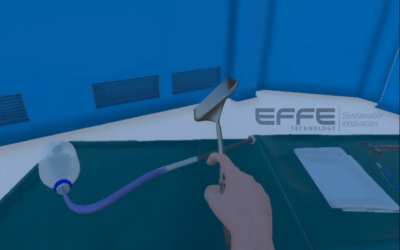
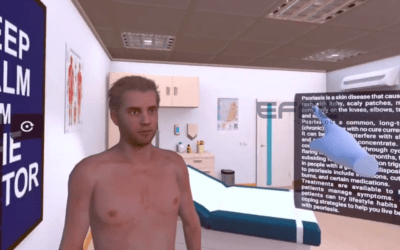
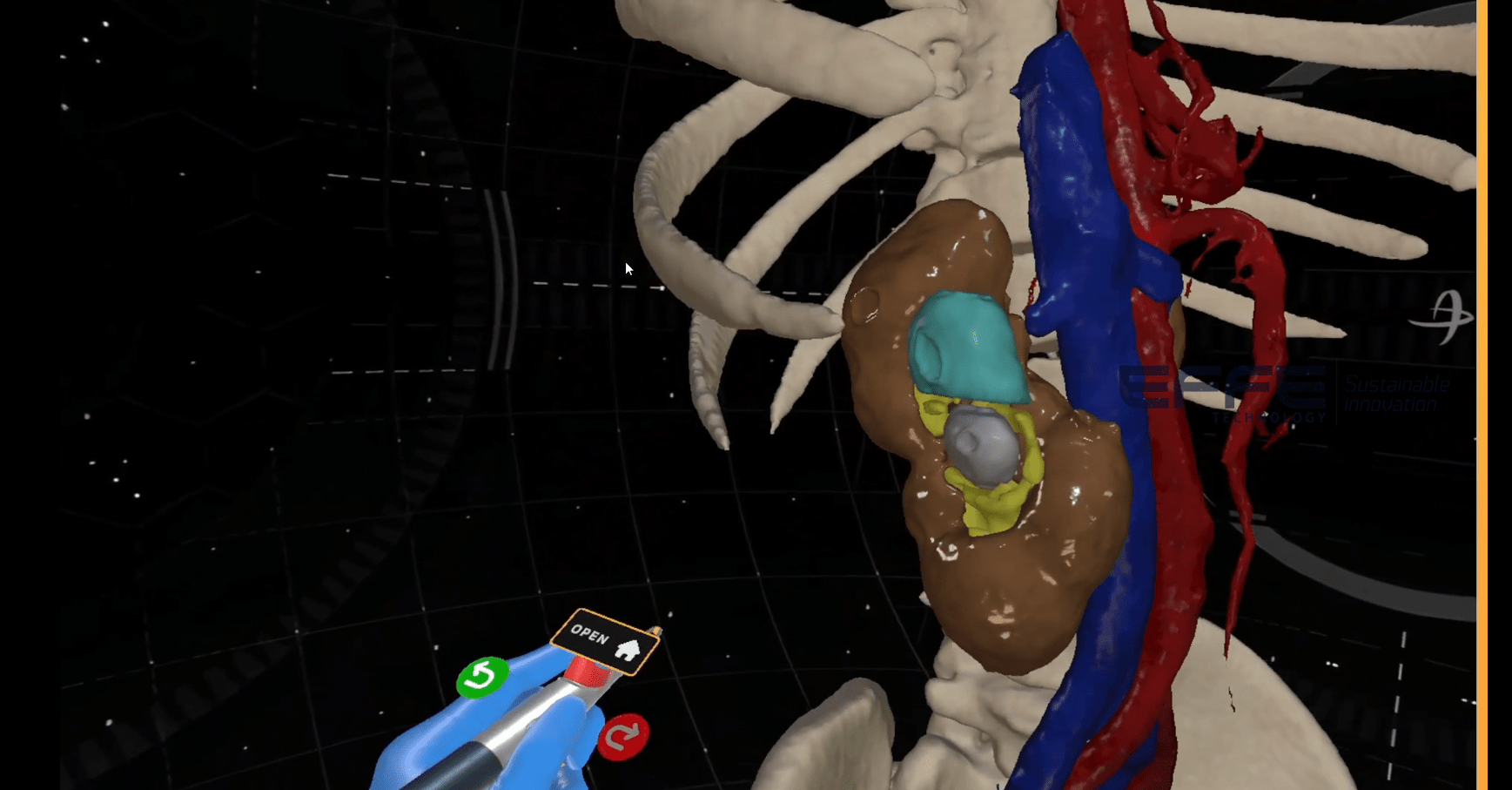
Using advanced 3D modeling and VR simulation tools, we created a fully immersive female urinary system VR training environment.
Users can:
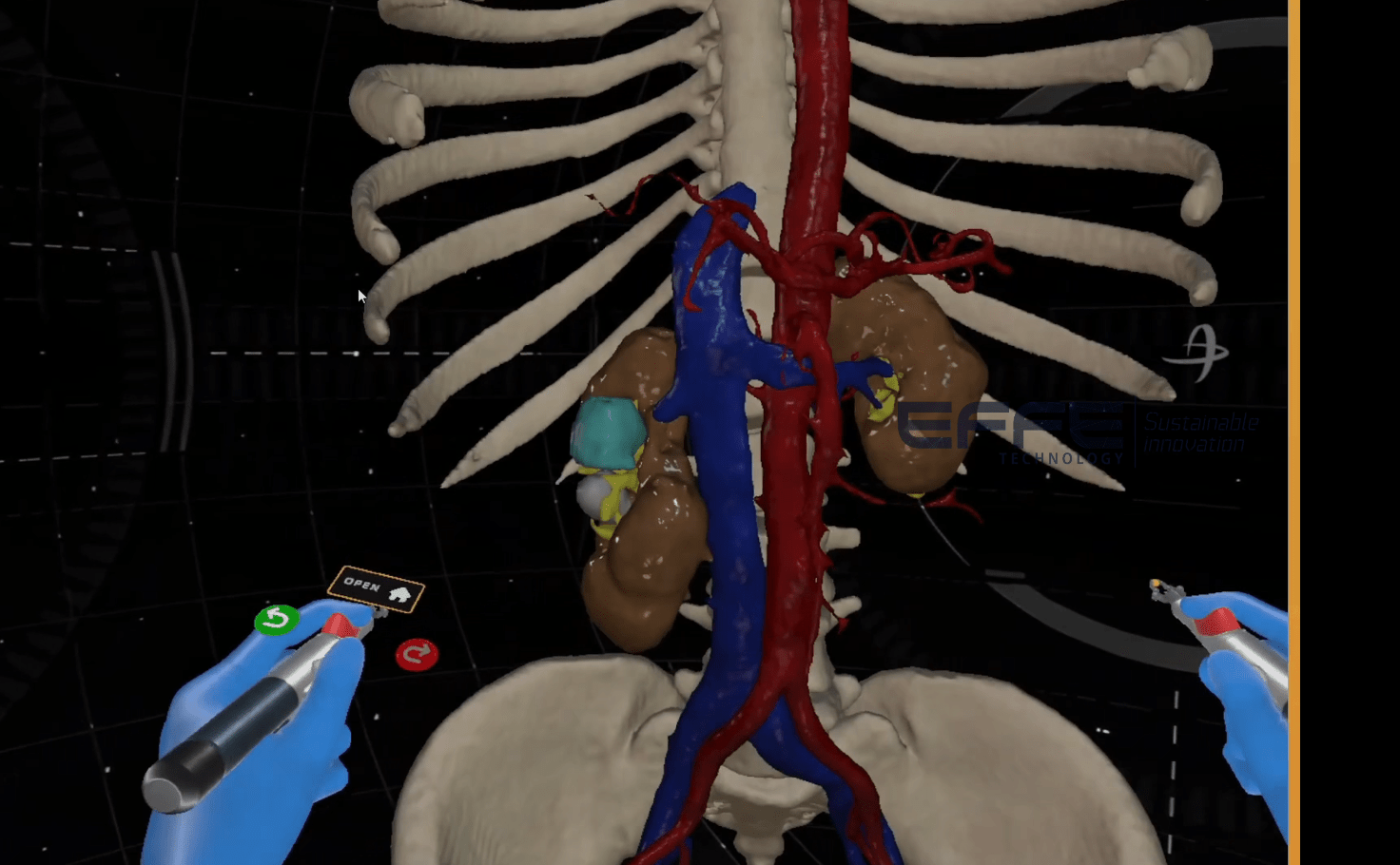
- Explore kidney nephrons in 3D and observe filtration and reabsorption dynamics
- Trace urine flow from the renal pelvis to the urethra
- Interact with bladder contraction and micturition mechanics
- Compare healthy vs pathological conditions affecting urinary system function
- Engage in scenario-based exercises for clinical learning
The platform also includes instructor dashboards to track engagement, module completion, and learning outcomes. By visualizing physiological processes interactively, learners gain an intuitive understanding of renal function and clinical implications.
Challenges & Learning
Accuracy vs Visualization: Translating complex nephron physiology into a VR-friendly format without oversimplifying required multiple validation rounds with medical experts.
Multi-level Learning: Ensuring the platform addressed undergraduate, postgraduate, and clinical audiences was achieved by layering content within the female urinary system 3D VR training modules.
Technical Optimization: Balancing high-resolution anatomical detail with smooth VR performance on multiple devices required careful 3D modeling and testing.
Through iterative feedback and clinical collaboration, we achieved a scientifically credible and engaging VR solution.
Client Deliverables
- Fully immersive VR platform demonstrating urinary system function
- Interactive female urinary system VR training modules
- Multi-user simulation capability for classrooms and hospital labs
- Instructor dashboards with analytics and assessment tools
- High-resolution VR content optimized for medical teaching and CME
- Ongoing technical support from a leading VR medical company
Conclusion
This urinary system function VR platform redefines how renal physiology is taught, simulated, and understood. By combining clinical accuracy, interactive 3D visualization, and multi-level training pathways, institutions gain a scalable, measurable, and future-ready educational tool.
For nephrology departments, urology clinics, and medical universities, investing in this VR solution means enhancing learning outcomes, improving clinical readiness, and partnering with a trusted VR medical company in India for innovative medical training.