
Overview
Understanding the human brain—especially the brainstem and intricate neural pathways—requires more than textbooks and static atlases. Neuroscience departments and teaching hospitals demand immersive, clinically accurate, and scalable training systems. This case study demonstrates how our neuroanatomy VR platform transformed brain science education through interactive exploration and high-fidelity simulation.
Designed for the Healthcare & Hospital Industry, Neuroscience & Neurology Departments, Medical Simulation Centers, and Neurosurgery & Neurovascular Care Sectors, this neuroanatomy VR solution empowers both institutional decision-makers and clinical end users. By combining structured brain anatomy VR simulation with immersive virtual reality brain anatomy environments, the platform enhances comprehension, surgical planning confidence, and academic performance.
For neurosurgeons, residents, anatomy professors, and medical students, this neuroanatomy VR system bridges the gap between theoretical neuroanatomy and real-world clinical application.
Project Requirement
The client required an advanced neuroanatomy VR training platform capable of:
- Delivering high-precision brain anatomy VR simulation modules
- Providing immersive virtual reality brain anatomy exploration of the brainstem and cranial nerves
- Supporting neurosurgical pathway visualization and functional mapping
- Enabling multi-user instructor-led sessions
- Offering performance tracking and assessment dashboards
- Integrating seamlessly within medical simulation labs
The primary objective was to implement a clinically validated neuroanatomy VR ecosystem that improves spatial understanding, procedural readiness, and interdisciplinary collaboration.
Project Planning
Our planning phase focused on anatomical accuracy, institutional scalability, and measurable educational outcomes. We collaborated with neurosurgeons, neurologists, anatomy professors, and simulation lab directors to align the neuroanatomy VR modules with academic and surgical training standards.
Key planning initiatives included:
- Structuring layered brain anatomy VR simulation modules for progressive learning
- Designing interactive virtual reality brain anatomy walkthroughs for brainstem neuroanatomy
- Mapping cranial nerve pathways and vascular structures with clinical correlations
- Developing case-based learning for neurosurgical residents
- Ensuring cross-department deployment across hospitals and universities
This ensured the neuroanatomy VR platform met both academic depth and surgical precision requirements.
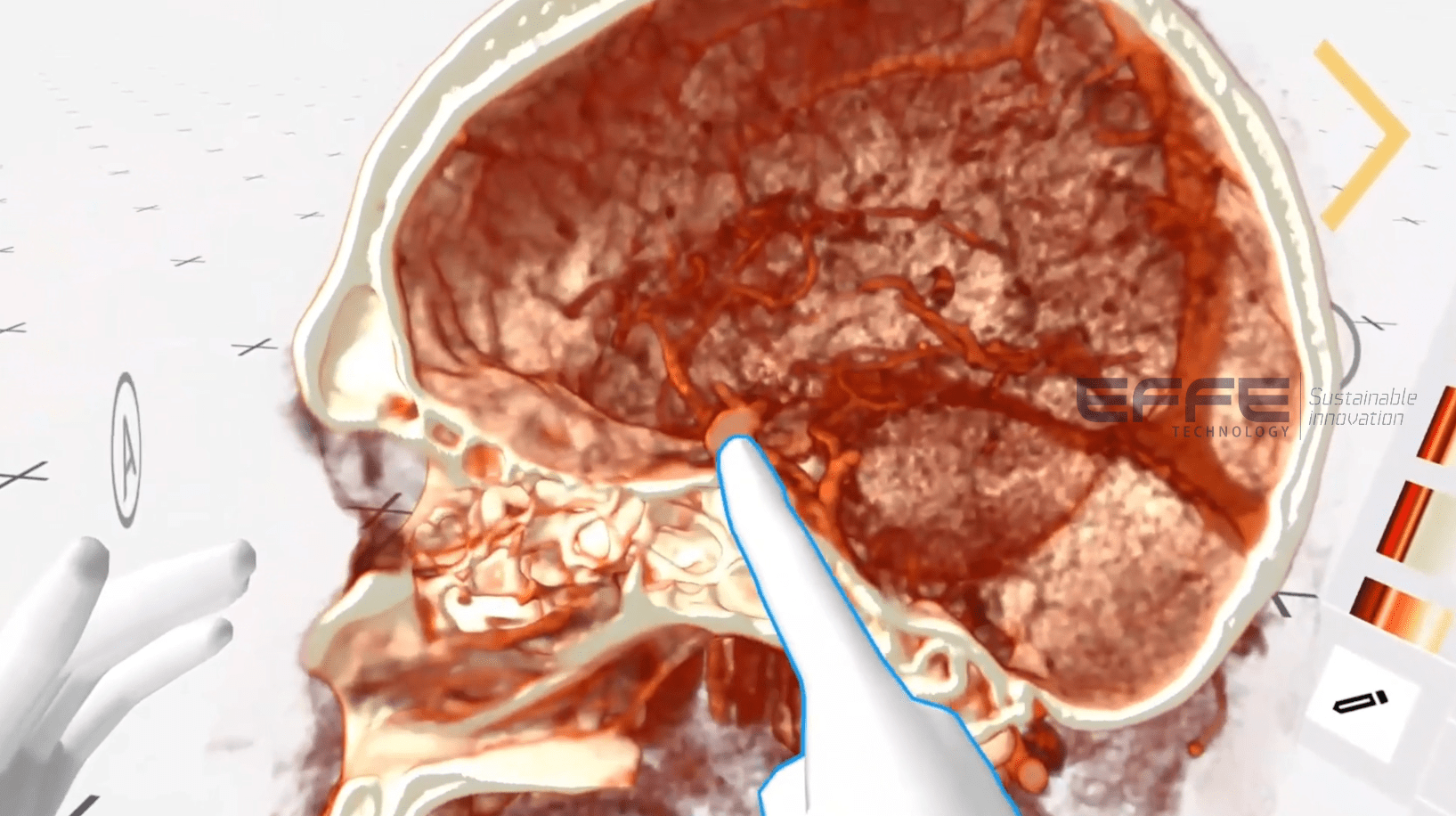
Project Process & Execution
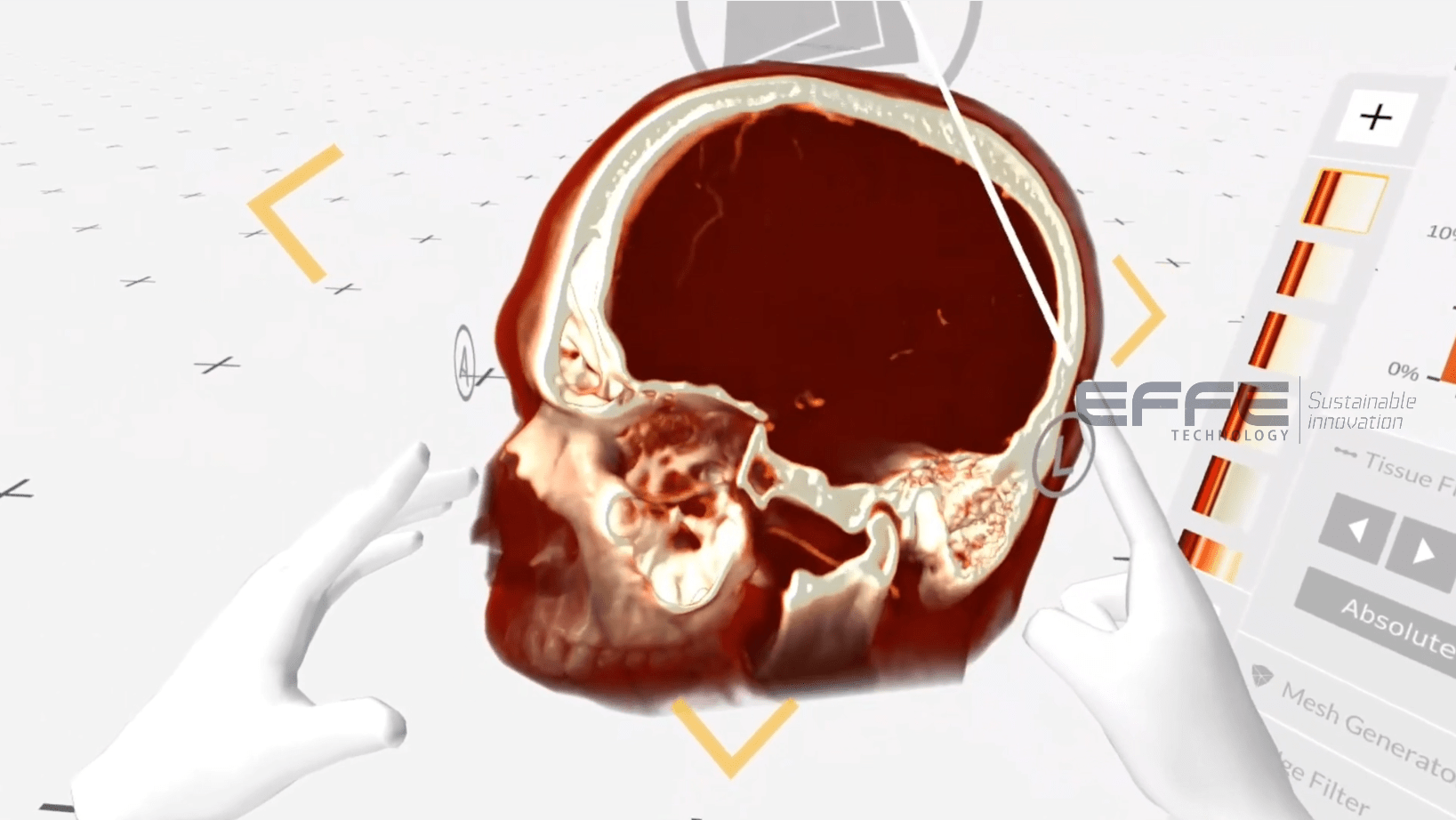
Using high-resolution MRI datasets and advanced 3D modeling technologies, we developed a fully immersive neuroanatomy VR training ecosystem. The system reconstructs cerebral hemispheres, cerebellum, brainstem structures, cranial nerves, and neurovascular pathways with exceptional clarity.
Within the platform, users can:
- Explore detailed virtual reality brain anatomy in full 360° immersion
- Isolate and dissect structures using interactive tools
- Navigate through layered brain anatomy VR simulation modules
- Visualize neural tracts and functional brain regions
- Compare normal anatomy with pathological variations
- Participate in collaborative, instructor-led training sessions
The neuroanatomy VR environment allows neurosurgery residents and neurologists to understand spatial relationships that are often difficult to grasp in traditional labs. Integrated analytics track module completion, engagement time, and assessment accuracy, providing measurable outcomes for department heads and administrators.
Challenges & Learning
Clinical Accuracy: Continuous validation with neuroscience experts ensured anatomical precision within the neuroanatomy VR system.
Complex Pathway Mapping: Accurately modeling neural tracts and brainstem neuroanatomy required detailed structural layering inside the brain anatomy VR simulation modules.
User Accessibility: The virtual reality brain anatomy interface was optimized for both advanced surgeons and first-year medical students.
Institutional Scalability: The platform was engineered for seamless deployment across simulation labs, medical colleges, and tertiary care hospitals.
These refinements strengthened institutional confidence and long-term usability.
Client Deliverables
- Fully immersive neuroanatomy VR training platform
- High-fidelity brain anatomy VR simulation modules
- Interactive virtual reality brain anatomy exploration tools
- Brainstem and cranial nerve pathway walkthrough modules
- Multi-user instructor dashboard
- Real-time analytics and performance reporting
- Cross-device compatibility for academic and hospital deployment
Conclusion
This project demonstrates how neuroanatomy VR can redefine neuroscience education and neurosurgical training. By integrating immersive virtual reality brain anatomy environments with structured brain anatomy VR simulation modules, the solution enhances spatial understanding, retention, and clinical preparedness.
For hospital administrators and CMOs, it offers a scalable, future-ready academic investment. For neurosurgeons, residents, and medical students, it delivers safe, repeatable, and deeply engaging learning experiences.
Through innovation grounded in scientific precision and measurable outcomes, this neuroanatomy VR platform sets a new benchmark for immersive neuroscience training.