
Overview
Precision is critical in hepatobiliary surgery. Complex vascular networks, segmental anatomy, and proximity to vital structures make liver procedures highly demanding. Traditional cadaveric practice and 2D imaging often limit spatial clarity and repeatability.
This case study demonstrates how we developed an advanced liver surgery VR simulation platform tailored for surgical centers, transplant institutes, and medical universities. By integrating immersive hepatic anatomy VR, structured liver anatomy VR simulation, and intelligent liver segment VR planning, we created a clinically validated ecosystem that bridges theoretical understanding with operative precision.
The liver surgery VR simulation empowers hepatobiliary surgeons, residents, and transplant teams to rehearse procedures in a safe, measurable, and highly realistic environment—improving confidence before entering the operating room.
Project Requirement
The client required a next-generation liver surgery VR simulation capable of:
- Visualizing real-time hepatic vasculature and biliary anatomy
- Supporting detailed liver segment VR planning for resections
- Delivering immersive hepatic anatomy VR exploration
- Enabling interactive liver anatomy VR simulation for tumor localization
- Simulating laparoscopic and open liver procedures
- Providing instructor-led modules for surgical residents
- Integrating analytics for performance evaluation
The primary objective was to build a clinically reliable liver surgery VR simulation that enhances surgical accuracy, reduces intraoperative risk, and supports advanced training programs.
Project Planning
Our planning phase focused on anatomical precision, surgical workflow alignment, and institutional scalability. We collaborated with hepatobiliary surgeons, transplant specialists, anesthesiologists, and surgical educators to validate the framework.
Key planning initiatives included:
- Structuring case-based liver surgery VR simulation modules
- Designing interactive hepatic anatomy VR layers for vascular mapping
- Integrating liver segment VR planning aligned with Couinaud segmentation
- Developing pathology-based liver anatomy VR simulation scenarios
- Ensuring compatibility with VR headsets and surgical simulation labs
This structured approach ensured the liver surgery VR simulation met both academic training standards and real-world operative demands.
Project Process & Execution
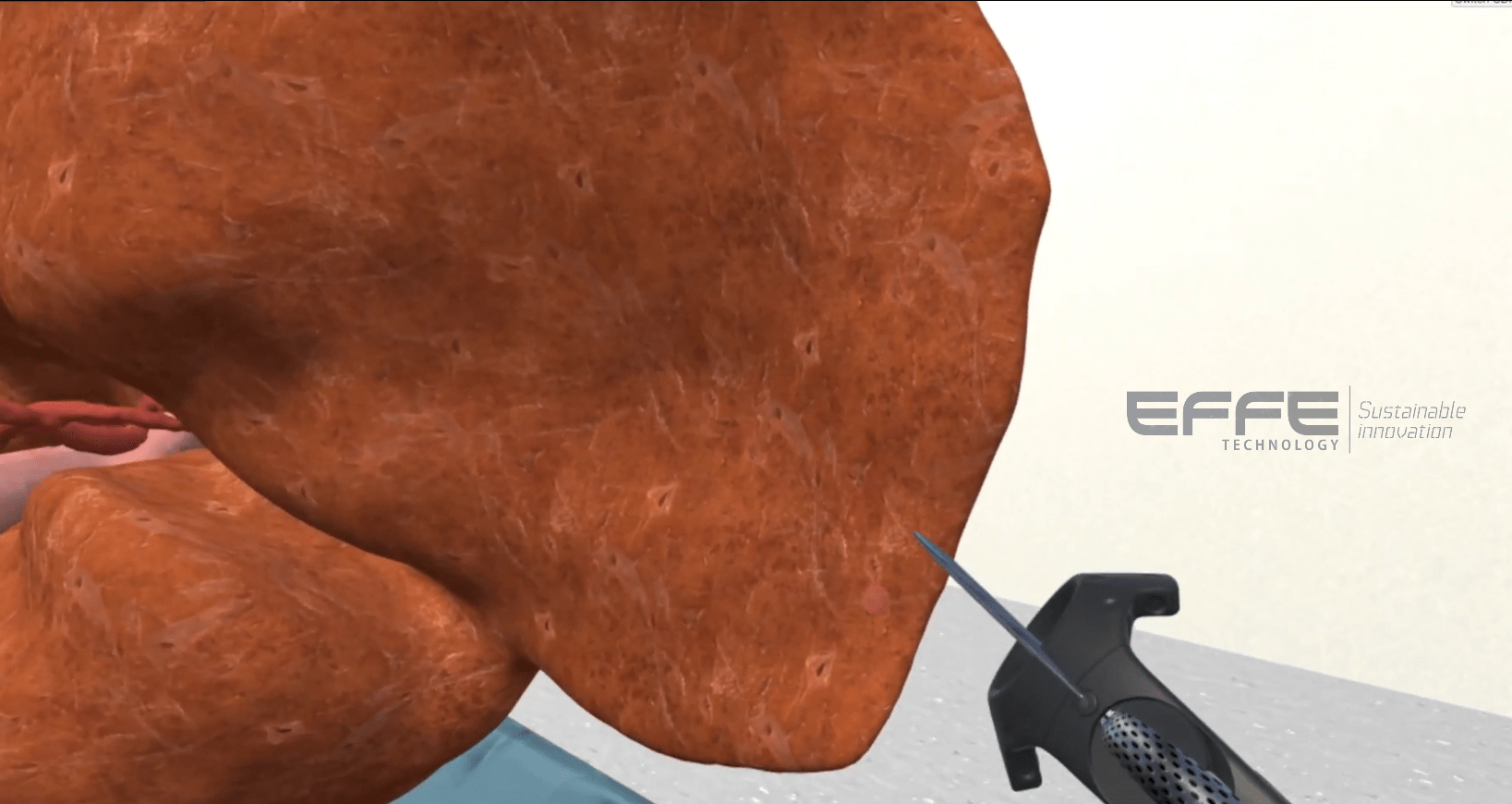
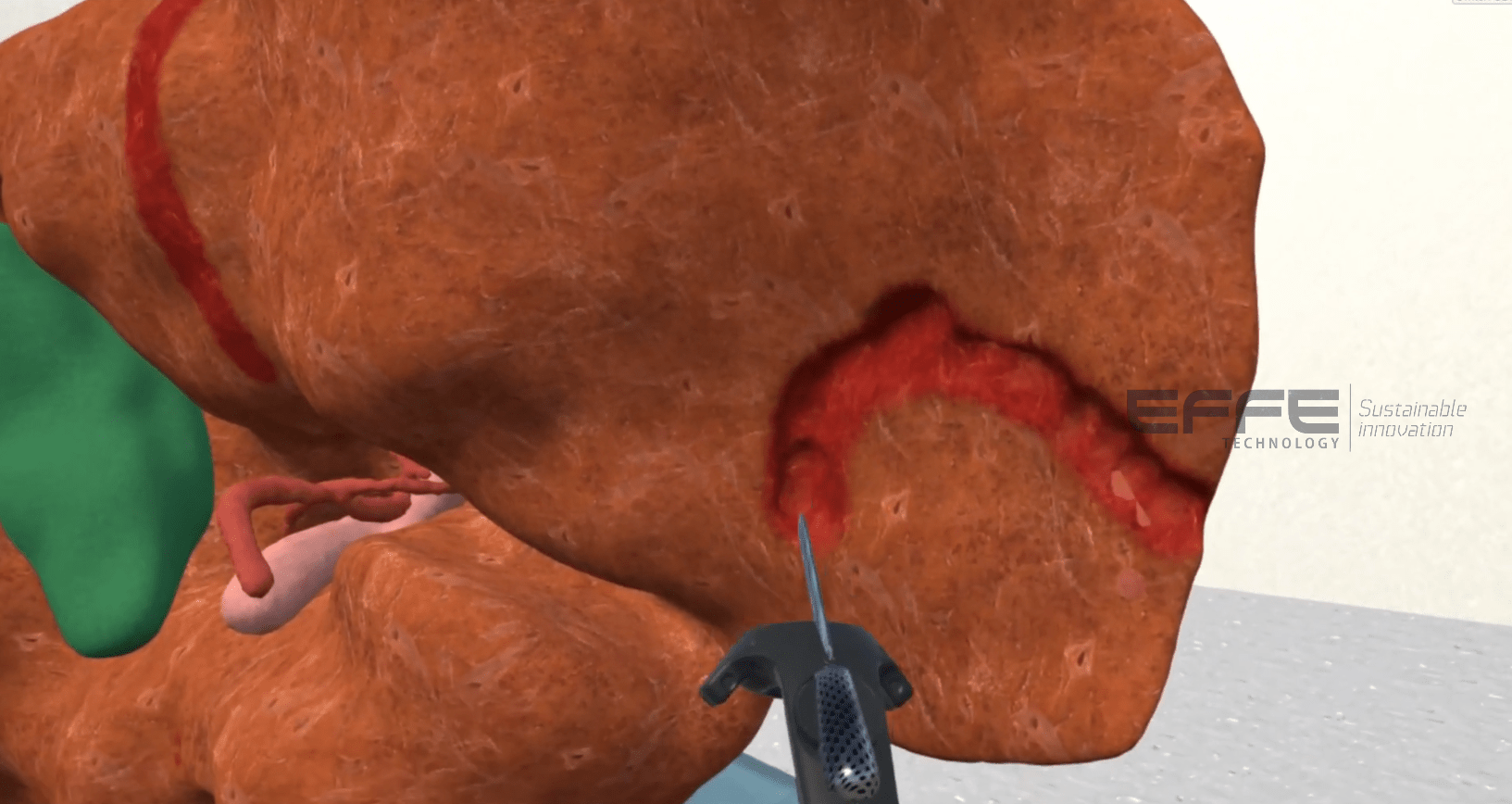
Using high-resolution CT and MRI datasets, we reconstructed a detailed 3D hepatic model with realistic tissue textures and vascular branching. The liver surgery VR simulation platform accurately represents portal veins, hepatic arteries, bile ducts, and segmental divisions.
Within the system, users can:
- Explore immersive hepatic anatomy VR in 360°
- Perform virtual resections using liver segment VR planning tools
- Identify tumors and vascular relationships in the liver anatomy VR simulation
- Practice laparoscopic approaches in the liver surgery VR simulation
- Simulate bleeding control and complication management
- Participate in instructor-led, multi-user collaborative sessions
The liver surgery VR simulation allows surgeons to rehearse complex cases repeatedly without patient risk. Real-time feedback tracks precision, timing, and adherence to procedural steps.
Integrated analytics provide measurable insights into trainee performance, helping simulation directors and CMOs evaluate competency progression.
Challenges & Learning
Anatomical Complexity: Replicating intricate hepatic vasculature within the liver surgery VR simulation required multiple expert validation cycles.
Realistic Tissue Interaction: Achieving lifelike dissection and resection mechanics inside the liver anatomy VR simulation demanded advanced rendering optimization.
Segmental Accuracy: Implementing precise liver segment VR planning tools required careful alignment with surgical classification systems.
User Diversity: The platform was optimized for senior transplant surgeons as well as early-stage residents.
These refinements strengthened institutional trust and ensured long-term adoption.
Client Deliverables
- Fully immersive liver surgery VR simulation platform
- Advanced hepatic anatomy VR visualization modules
- Structured liver anatomy VR simulation curriculum
- Integrated liver segment VR planning tools
- Multi-user instructor dashboard
- Performance analytics and surgical assessment tracking
- Cross-device deployment for hospitals and training centers
Conclusion
The liver surgery VR simulation platform transforms hepatobiliary training by combining clinical precision with immersive interactivity. Through advanced hepatic anatomy VR, intelligent liver segment VR planning, and high-fidelity liver anatomy VR simulation, institutions gain a future-ready solution for surgical excellence.
For hospital administrators and surgical department heads, it represents a measurable investment in patient safety and procedural efficiency. For surgeons and trainees, it delivers safe, repeatable mastery of complex liver procedures—building confidence, accuracy, and trust before stepping into the operating room.