
Overview
Understanding Integumentary system function is fundamental for dermatology, nursing, cosmetology, and allied health education. From protection and thermoregulation to sensation and immune defense, the skin performs complex physiological roles that are often difficult to visualize through textbooks alone.
To address this gap, we developed an immersive VR-based learning platform that explains Integumentary system function through interactive simulation. Designed for hospitals, medical universities, dermatology clinics, and healthcare training institutes, the solution combines high-fidelity virtual reality skin anatomy with dynamic physiological demonstrations.
This platform enables learners to explore Integumentary system organs—including skin, hair, nails, sweat glands, and sebaceous glands—while observing how each structure contributes to overall Integumentary system function in real time.
Project Requirement
The client required a clinically accurate and scalable VR platform capable of:
- Demonstrating complete Integumentary system function in an interactive 3D environment
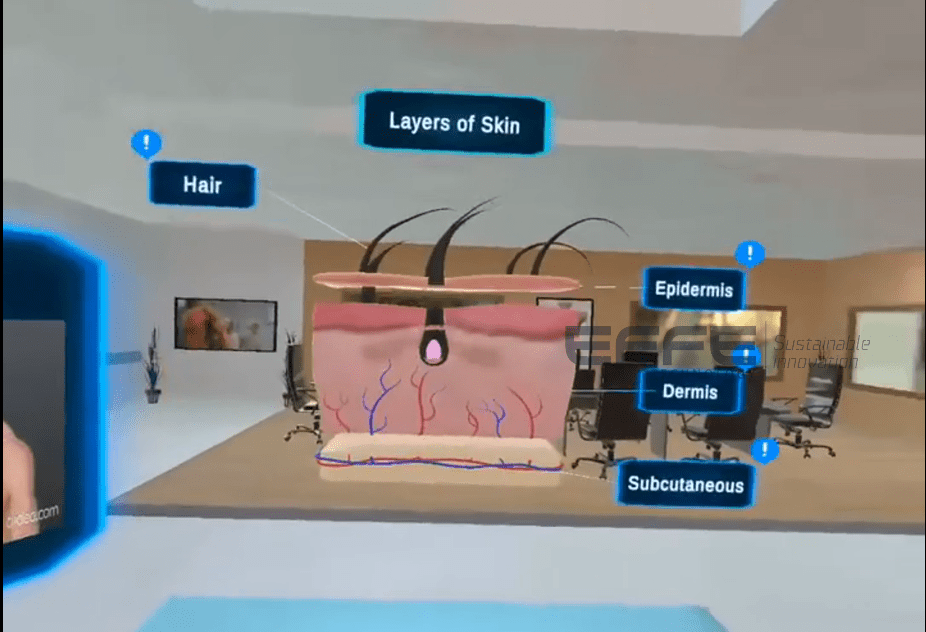
- Showcasing detailed virtual reality skin anatomy with labeled layers and structures
- Explaining the role of Integumentary system organs in protection, temperature control, and sensation
- Supporting academic teaching, simulation-based learning, and CME sessions
- Enabling pathology visualization (burns, infections, inflammatory conditions)
- Providing measurable analytics for institutional training evaluation
The objective was to create a trusted and institution-ready solution that simplifies complex physiology while maintaining clinical credibility.
Project Planning
Our planning phase focused on anatomical accuracy, physiological clarity, and curriculum integration.
We collaborated with dermatologists, physiology professors, and clinical educators to ensure that every module explaining Integumentary system function aligned with medical textbooks and hospital training protocols. The virtual reality skin anatomy environment was structured to gradually demonstrate how each layer and structure contributes to systemic balance.
Key planning initiatives included:
- Mapping all Integumentary system organs with functional overlays
- Designing animated sequences for thermoregulation, wound healing, and immune response
- Integrating case-based dermatology examples
- Building faculty dashboards for performance tracking
- Ensuring cross-device VR compatibility for simulation labs
This structured roadmap ensured the platform met both academic and hospital training standards.
Project Process & Execution
Using advanced 3D modeling tools and medically validated datasets, we built a fully immersive platform centered on Integumentary system function.
Inside the VR environment, users can:
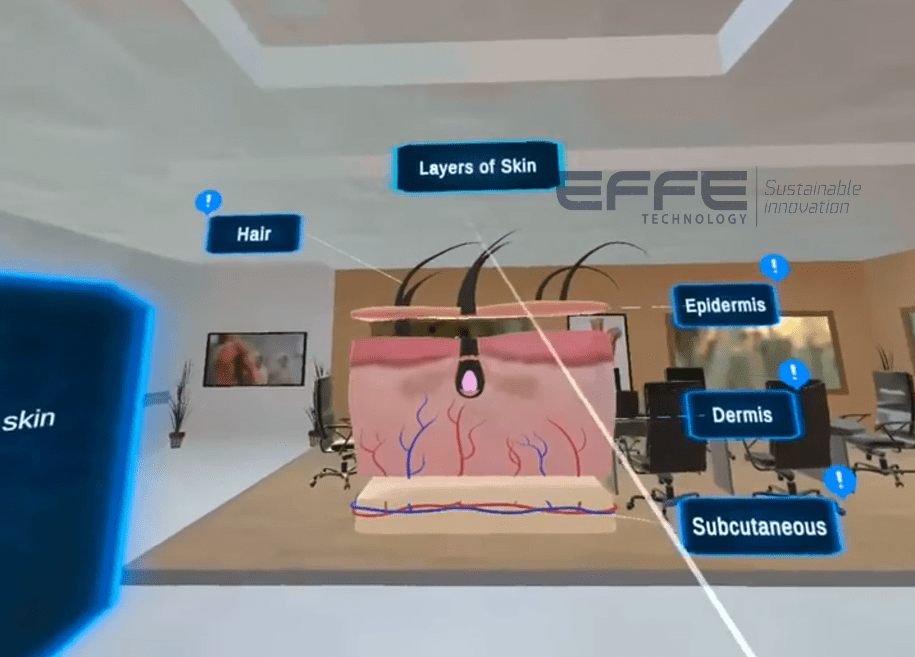
- Explore virtual reality skin anatomy in 360° immersion
- Interact with epidermis, dermis, and hypodermis layers
- Visualize how Integumentary system organs regulate temperature and fluid balance
- Observe nerve signaling for touch and pain sensation
- Simulate wound healing and inflammatory responses
- Compare healthy and pathological skin conditions
Dynamic animations demonstrate how each structure supports overall Integumentary system function, transforming abstract physiological concepts into visually understandable experiences.
The platform also integrates analytics to track module completion, engagement levels, and assessment accuracy—helping academic deans, CMOs, and hospital training managers measure outcomes effectively.
Challenges & Learning
Translating Physiology into Visualization:
Explaining Integumentary system function dynamically required careful synchronization between anatomical structures and physiological animations.
Balancing Academic Depth with Usability:
While the virtual reality skin anatomy environment needed to remain detailed, it also had to be intuitive for nursing and allied health learners.
Institutional Validation:
To gain trust from hospitals and research institutes, every module related to Integumentary system organs underwent expert review and multiple clinical validation cycles.
These refinements strengthened credibility and ensured long-term institutional adoption.
Client Deliverables
- Immersive VR platform explaining Integumentary system function
- Clinically validated virtual reality skin anatomy modules
- Interactive visualization of Integumentary system organs
- Pathology simulation tools
- Instructor dashboard with analytics and reporting
- Multi-user scalability for universities and hospitals
- Deployment, onboarding, and technical support
Conclusion
This VR solution transforms how Integumentary system function is taught across healthcare institutions. By combining interactive visualization, measurable analytics, and clinically aligned content, the platform builds deeper anatomical understanding and stronger clinical confidence.
For medical universities, dermatology clinics, nursing colleges, and healthcare training centers, adopting this immersive solution means investing in future-ready education built on precision, credibility, and measurable learning outcomes.