
Overview
Modern cardiology demands more than static diagrams and classroom lectures. Hospitals and academic institutions require dynamic, measurable, and clinically accurate training tools that reflect real-time heart function. This case study highlights how a cardiovascular system VR platform transformed cardiac education and clinical preparedness through an immersive heart rate and cardiac function simulator.
Designed for the Healthcare & Hospital Industry, Cardiology & Cardiovascular Care Sector, and Medical Simulation Centers, this cardiovascular system VR solution enables administrators and department heads to implement scalable, performance-driven learning systems. At the same time, cardiologists, residents, nurses, and medical students gain hands-on exposure to real-time physiological processes inside a fully interactive virtual reality cardiovascular system environment.
By integrating cardiovascular anatomy VR simulation with structured VR cardiovascular training, the platform bridges the gap between theoretical knowledge and real-world clinical decision-making.
Project Requirement
The client required a hospital-grade cardiovascular system VR platform capable of:
- Simulating real-time heart rate variations and cardiac cycles
- Demonstrating hemodynamic changes within a virtual reality cardiovascular system
- Providing structured VR cardiovascular training modules
- Delivering high-fidelity cardiovascular anatomy VR simulation
- Enabling performance tracking for measurable clinical outcomes
- Supporting multi-user sessions for instructor-led hospital training
- Ensuring compatibility with VR headsets and simulation lab infrastructure
The primary objective was to implement a clinically trusted cardiovascular system VR solution that improves understanding of cardiac mechanics, patient monitoring, and emergency response preparedness.
Project Planning
The planning phase focused on clinical realism, institutional scalability, and measurable performance improvement. We collaborated with cardiologists, simulation lab heads, and clinical education coordinators to structure the cardiovascular system VR modules around hospital workflows and learning benchmarks.
Key planning initiatives included:
- Structuring a layered cardiovascular anatomy VR simulation for progressive learning
- Integrating dynamic heart rate and arrhythmia scenarios inside the virtual reality cardiovascular system
- Designing interactive case-based VR cardiovascular training exercises
- Mapping training objectives to ICU and emergency response protocols
- Planning deployment across multiple departments and teaching hospitals
This strategic planning ensured the cardiovascular system VR platform aligned with institutional goals and clinical accuracy standards.
Project Process & Execution
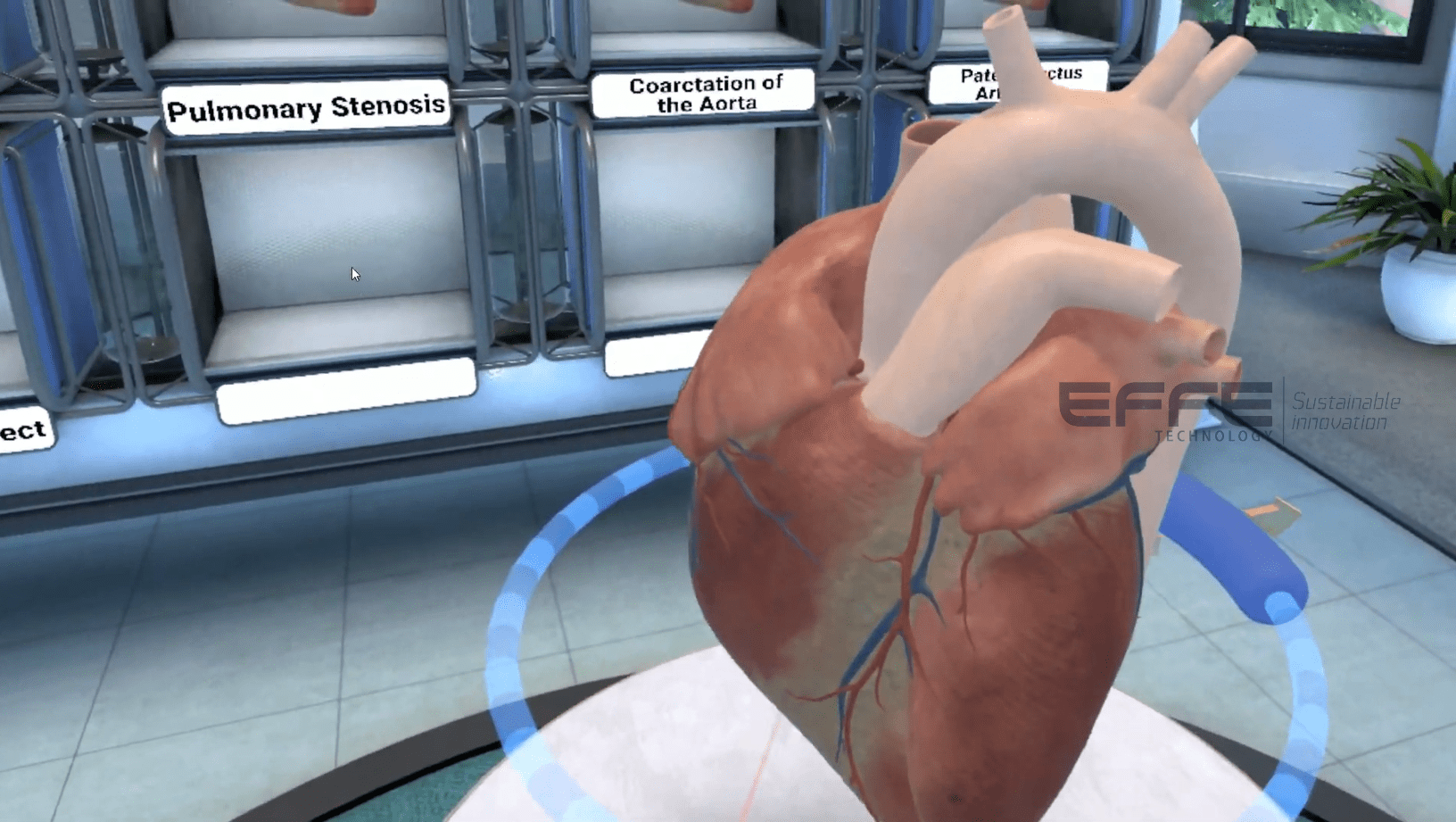
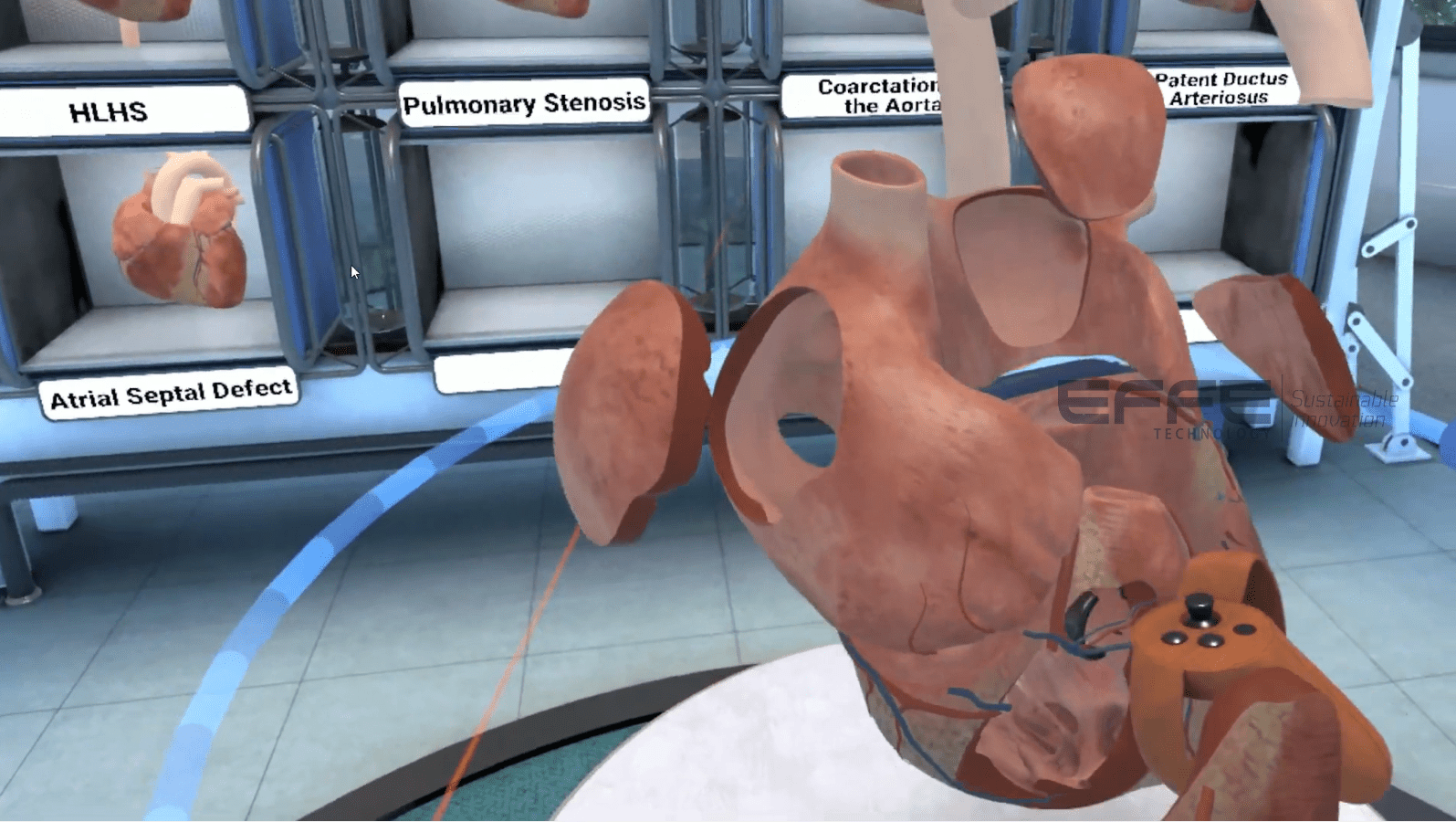
The execution phase involved developing a high-fidelity cardiovascular anatomy VR simulation using advanced 3D modeling and real-time physics engines. The immersive virtual reality cardiovascular system environment replicates heart chambers, valves, arteries, and blood flow dynamics with clinical precision.
Users can:
- Explore a complete cardiovascular system VR model in 360° immersion
- Adjust heart rate parameters to simulate tachycardia, bradycardia, and arrhythmias
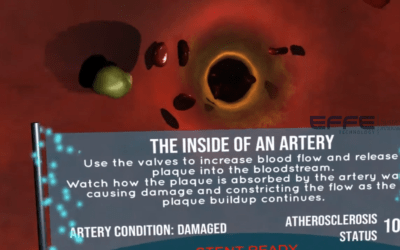
- Visualize blood circulation changes in real time
- Practice emergency decision-making through guided VR cardiovascular training scenarios
- Compare normal and pathological cardiac functions
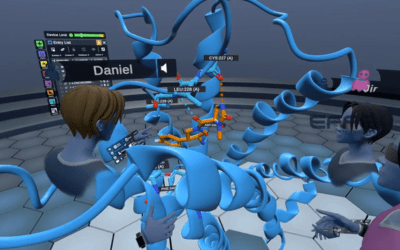
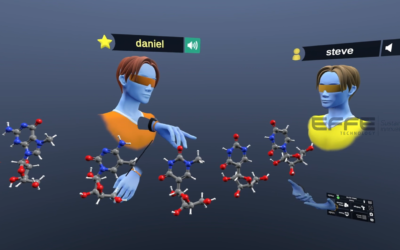
- Participate in instructor-led multi-user sessions
By combining anatomical detail with physiological simulation, the cardiovascular system VR platform delivers realistic learning experiences that strengthen clinical reasoning and confidence.
Advanced analytics were embedded to track learner performance, module completion, and response accuracy—providing hospital administrators and medical directors with measurable ROI from the VR cardiovascular training program.
Challenges & Learning
Clinical Accuracy: Continuous validation with cardiologists ensured the cardiovascular system VR simulations reflected authentic cardiac physiology.
Dynamic Modeling: Achieving seamless interaction within the virtual reality cardiovascular system required precise synchronization between heart rate, blood flow, and anatomical animation.
User Accessibility: The cardiovascular anatomy VR simulation interface was optimized for both experienced clinicians and first-time VR users.
Scalability: The platform was engineered for deployment across hospital departments, medical universities, and simulation labs without infrastructure disruption.
These refinements strengthened institutional trust and ensured long-term adoption.
Client Deliverables
- Fully immersive cardiovascular system VR training platform
- Real-time heart rate and function simulator
- High-precision cardiovascular anatomy VR simulation modules
- Structured VR cardiovascular training programs
- Multi-user instructor dashboard
- Real-time analytics and performance reporting
- Cross-device compatibility for hospital deployment
Conclusion
This project demonstrates how a cardiovascular system VR solution can redefine hospital-based cardiac training. By combining immersive virtual reality cardiovascular system visualization with structured VR cardiovascular training, the platform delivers measurable improvements in comprehension, clinical preparedness, and confidence.
For decision makers, it provides a scalable, future-ready training ecosystem. For cardiologists, residents, nurses, and medical students, it offers safe, repeatable, and immersive practice aligned with real-world patient care.
Through innovation grounded in clinical precision and measurable outcomes, this cardiovascular system VR solution establishes a new benchmark in immersive cardiovascular education and hospital simulation training.