
Overview
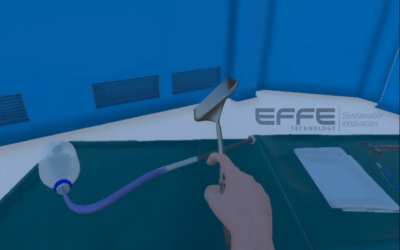
Dermatological disorders involve complex pathological mechanisms that are often difficult to teach or visualize using textbooks, slides, or 2D images. Traditional clinical training methods—limited patient exposure, case observation, or cadaver labs—can restrict understanding of disease progression and treatment outcomes. To bridge this gap, we developed an advanced dermatological disease VR platform tailored for dermatology departments, cosmetic clinics, medical universities, and simulation training centers.
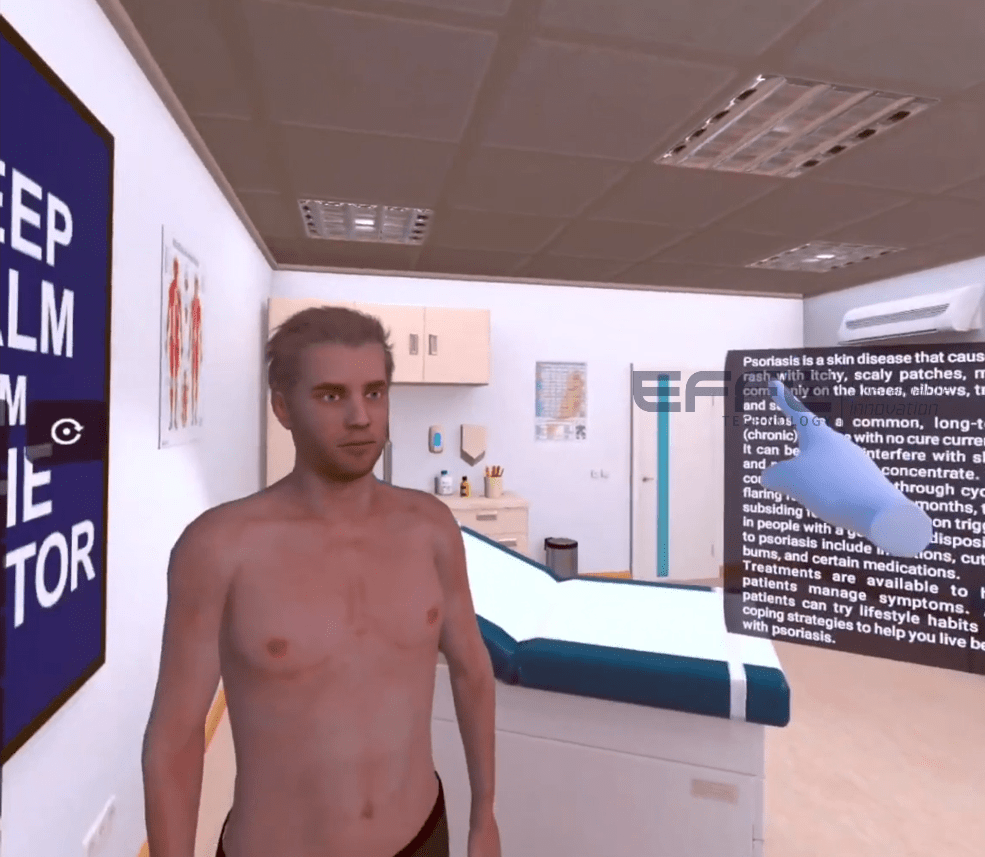
This immersive solution enables dermatologists, residents, medical students, and clinical educators to explore skin disease mechanisms interactively in a 3D environment. By combining realistic anatomical modeling with scenario-based skin disorder VR simulation, the platform improves knowledge retention, supports preventive training, and strengthens decision-making. Integrated VR dermatology training ensures learners gain hands-on experience without patient risk, making it a trusted tool for modern dermatological education.
Project Requirement
The client required a scalable dermatological disease VR system that could:
- Simulate common and complex skin disorders including eczema, psoriasis, acne, and dermatoses in real time.
- Deliver structured VR dermatology training modules for residents, fellows, and medical students.
- Provide interactive skin disorder VR simulation for diagnosis, treatment planning, and procedural rehearsal.
- Support analytics for performance tracking and competency assessment.
- Deploy seamlessly across hospitals, clinics, and educational institutions.
The objective was to create a reliable dermatological disease VR ecosystem that enhances clinical understanding while prioritizing safe, effective learning experiences.
Project Planning
Our team collaborated with dermatologists, cosmetic specialists, and medical educators to ensure clinical accuracy. Key planning initiatives included:
- Developing high-fidelity 3D models representing skin layers, lesions, and pathological variations.
- Designing immersive VR dermatology training modules that mirror real-life patient scenarios.
- Integrating interactive features such as lesion identification, treatment simulation, and therapeutic decision-making.
- Embedding analytics dashboards to track learner performance and treatment planning accuracy.
- Ensuring multi-device compatibility for educational and clinical settings.
All modules underwent expert validation to ensure both educational reliability and clinical authenticity.
Project Process & Execution
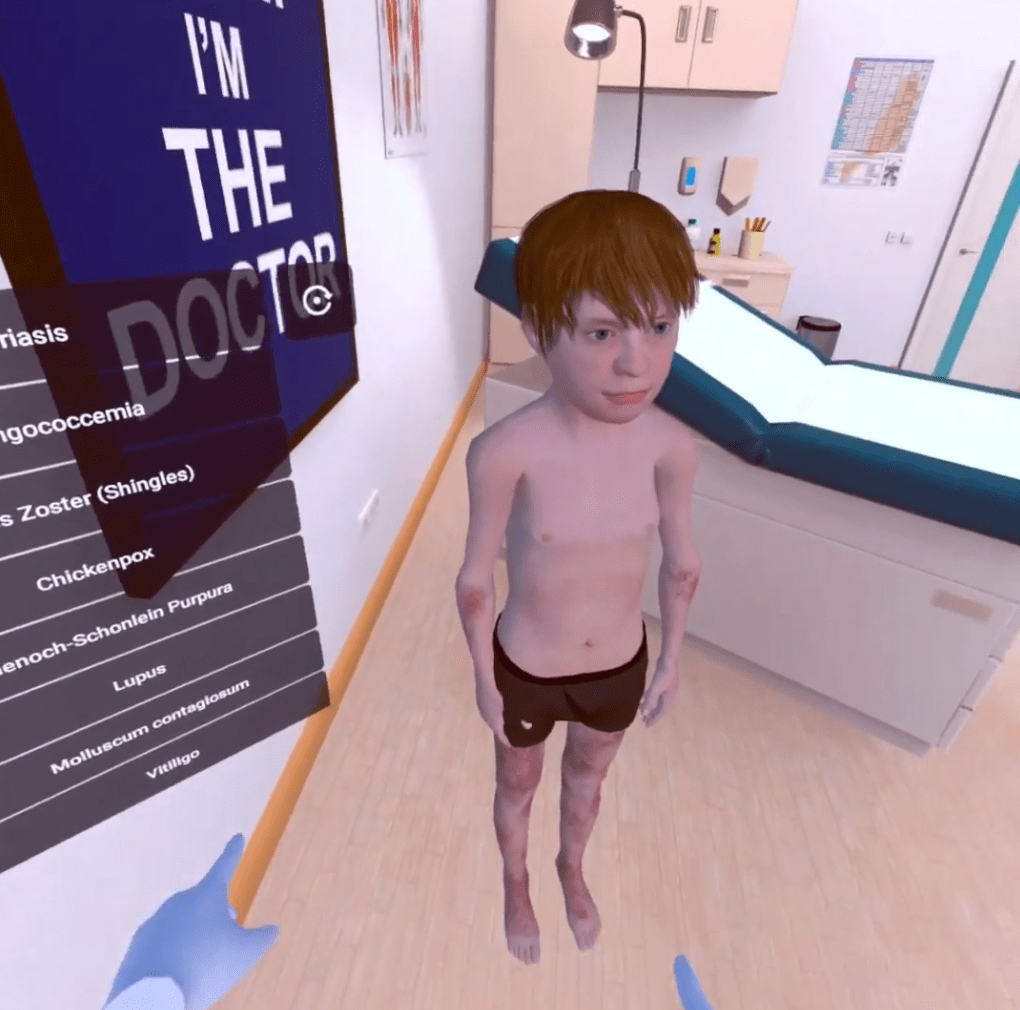
Using advanced 3D modeling, physics-based rendering, and immersive VR frameworks, we delivered a comprehensive dermatological disease VR platform that allows users to:
- Explore normal and diseased skin in full 3D for a detailed understanding of pathology.
- Practice diagnostic and therapeutic decision-making through skin disorder VR simulation exercises.
- Repeat scenarios to reinforce procedural accuracy and clinical confidence.
- Participate in instructor-led and self-guided VR dermatology training sessions.
The platform also integrates patient outcome simulations, helping learners understand treatment effects over time. This combination of immersive practice with measurable analytics makes it a leading Healthcare VR solution for dermatology education and training.
Challenges & Learning
One of the main challenges was replicating complex skin textures and disease-specific changes in a realistic VR environment. Continuous feedback from dermatology experts allowed us to refine lesion representation and skin layer responsiveness. Balancing clinical depth with user-friendly navigation ensured accessibility for students while providing meaningful complexity for experienced dermatologists.
This project confirmed that dermatological disease VR not only improves skill acquisition but also enhances engagement, retention, and learner confidence in clinical decision-making.
Client Deliverables
- Fully immersive dermatological disease VR platform
- High-fidelity 3D skin models for pathology visualization
- Structured VR dermatology training curriculum
- Interactive skin disorder VR simulation modules
- Analytics dashboards for performance measurement
- Multi-device deployment across hospitals, clinics, and academic institutions
- Ongoing technical and clinical support
Conclusion
Our dermatological disease VR solution transforms dermatology education by merging immersive visualization, interactive practice, and measurable skill development. For dermatology departments, cosmetic clinics, and teaching hospitals, this platform provides a future-ready ecosystem that enhances learning, builds clinical confidence, and improves patient care outcomes through advanced Healthcare VR solutions.