
Overview
Understanding respiratory diseases requires more than textbook diagrams and static slides. Complex mechanisms such as airway inflammation, bronchoconstriction, and alveolar damage are difficult to visualize in traditional classrooms. To address this, we developed an advanced respiratory system VR platform tailored for pulmonology departments, medical universities, clinical research organizations, and public health institutions.
This immersive respiratory system VR solution enables pulmonologists, residents, medical students, and clinical educators to explore lung anatomy and disease progression in a fully interactive 3D environment. By integrating detailed models with scenario-based learning, the platform enhances clinical clarity, improves knowledge retention, and supports competency-driven education. As part of modern virtual reality for medical training, it bridges the gap between theory and real-world respiratory care.
Project Requirement
The client required a scalable respiratory system VR platform that could:
- Visualize normal lung anatomy and pathological changes in real time.
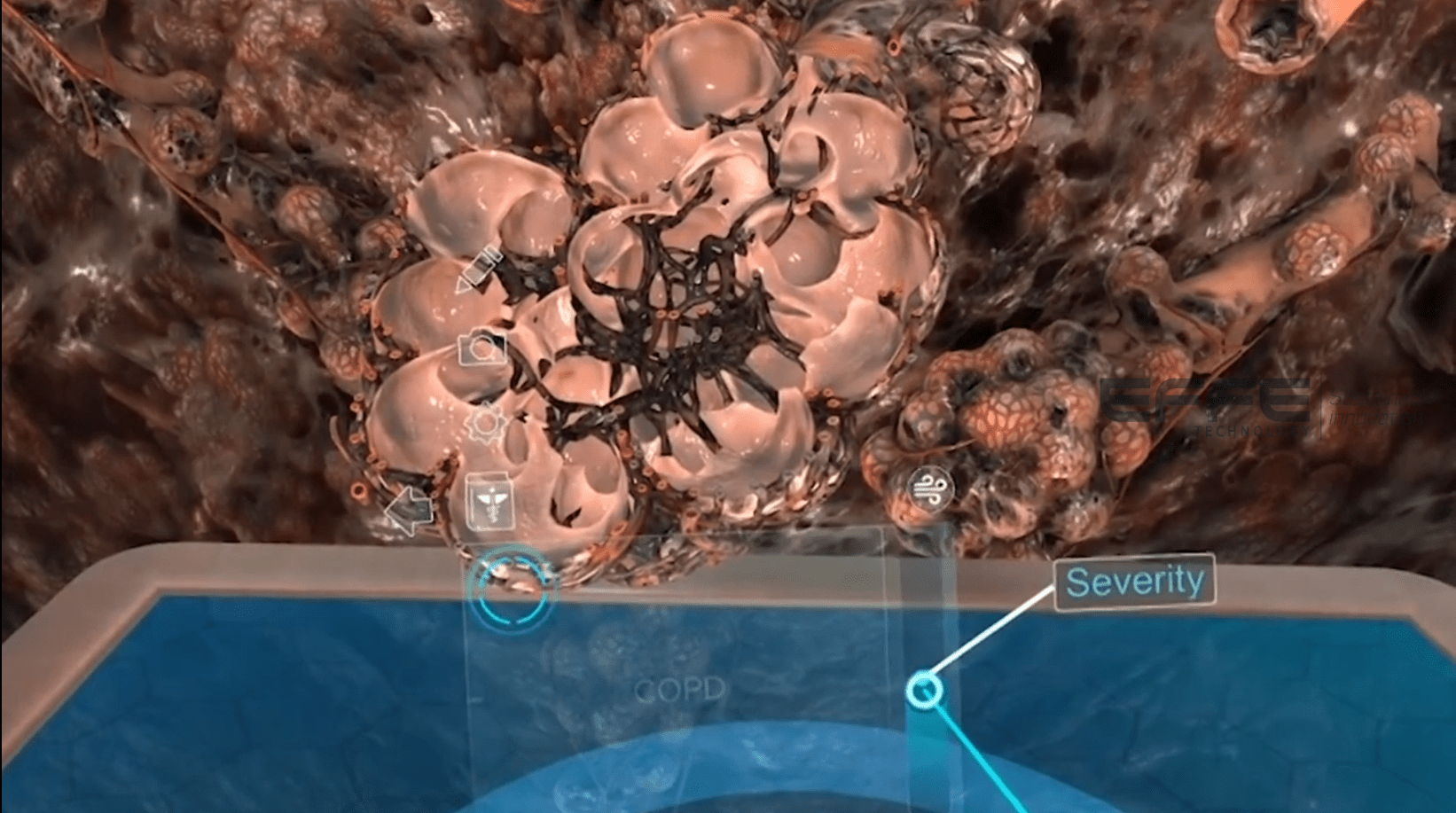
- Deliver interactive respiratory disease VR simulation modules for asthma and COPD.
- Integrate dynamic asthma VR animation to demonstrate airway narrowing and inflammation.
- Support structured COPD VR training scenarios for exacerbation management.
- Provide measurable assessment tools for academic and clinical training.
The goal was to create a trusted respiratory system VR ecosystem that enhances preventive education, strengthens diagnostic understanding, and improves clinical preparedness.
Project Planning
We collaborated closely with pulmonologists, respiratory physicians, and medical educators to ensure scientific and clinical accuracy.
Key planning steps included:
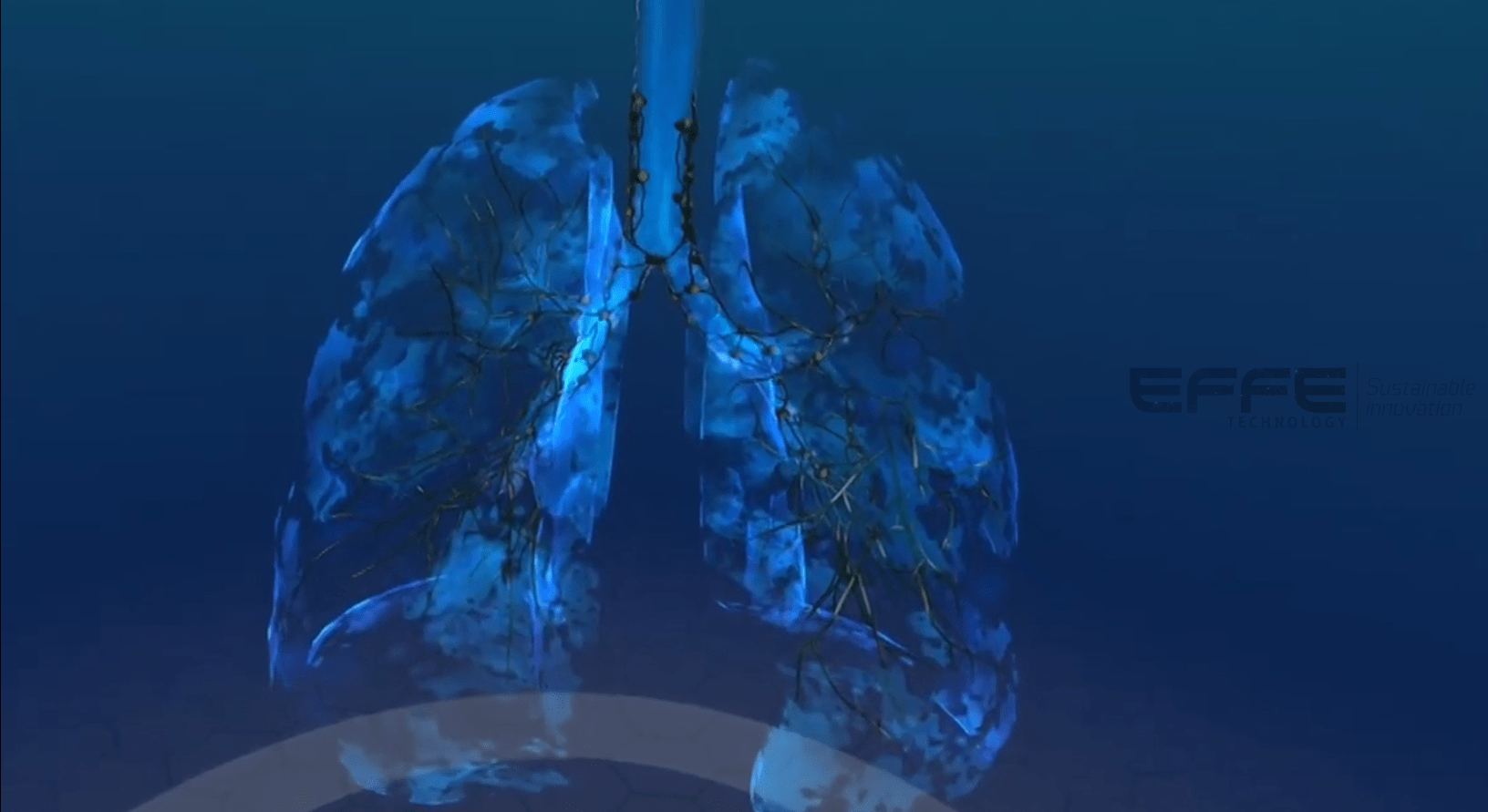
- Designing anatomically precise 3D lung and airway models within the respiratory system VR environment.
- Developing layered respiratory disease VR simulation modules covering asthma triggers and COPD progression.
- Creating high-fidelity asthma VR animation to visualize bronchospasm and mucus buildup.
- Structuring interactive COPD VR training cases aligned with real clinical protocols.
- Embedding analytics dashboards for performance tracking in virtual reality for medical training settings.
Each module underwent expert validation to maintain evidence-based accuracy and educational reliability.\
Project Process & Execution
Using advanced 3D modeling, real-time rendering engines, and immersive VR frameworks, we built a comprehensive respiratory system VR platform that allows users to:
- Navigate through the trachea, bronchi, and alveoli in a fully interactive environment.
- Compare healthy lungs with pathological conditions via respiratory disease VR simulation.
- Observe airway constriction through detailed asthma VR animation sequences.
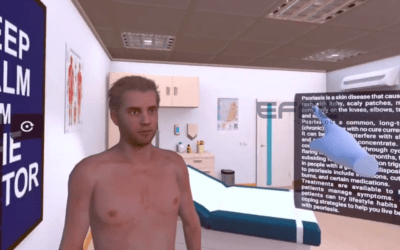
- Practice patient assessment and management scenarios in COPD VR training modules.
- Repeat simulations to strengthen decision-making and diagnostic reasoning.
The respiratory system VR system supports classroom learning, simulation lab training, and public health awareness programs. Integrated performance dashboards measure accuracy, response time, and clinical understanding, making it ideal for structured virtual reality for medical training curricula.
Hospitals and universities adopting this solution reported improved student engagement, stronger conceptual clarity, and better preparedness for real-world respiratory case management.
Challenges & Learning
One of the primary challenges was replicating microscopic-level processes such as alveolar damage and inflammatory pathways within the respiratory system VR environment. Through iterative development and expert feedback, we enhanced visual realism and ensured pathophysiological accuracy.
Balancing advanced medical detail with intuitive usability was another key focus. The respiratory disease VR simulation needed to remain accessible to MBBS students while offering depth for pulmonology fellows. By combining layered content with interactive COPD VR training and asthma VR animation, we achieved both clarity and complexity within a single respiratory system VR platform.
Client Deliverables
- Fully immersive respiratory system VR platform
- Interactive respiratory disease VR simulation modules (Asthma & COPD)
- Realistic asthma VR animation and disease progression visualization
- Structured COPD VR training curriculum
- Performance analytics dashboard for measurable assessment
- Multi-device deployment for hospitals, universities, and research institutions
- Ongoing technical and clinical support
Conclusion
Our respiratory system VR solution transforms respiratory education through immersive visualization, repeatable simulation, and measurable learning outcomes. By integrating advanced respiratory disease VR simulation, detailed asthma VR animation, and structured COPD VR training, this platform establishes a future-ready model for virtual reality for medical training.
For pulmonology departments, medical universities, and public health institutions, investing in this respiratory system VR ecosystem means empowering clinicians and students with deeper understanding, stronger clinical confidence, and improved patient care outcomes.