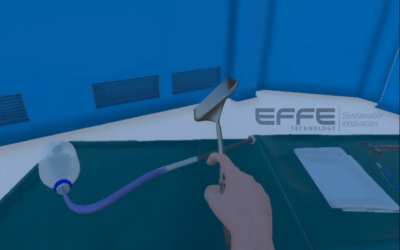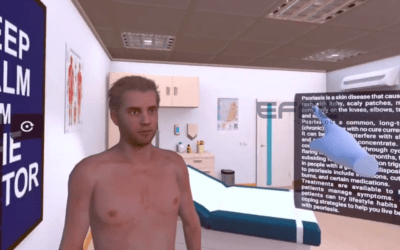

Overview
Mastering laparoscopic procedures demands precision, depth perception, hand–eye coordination, and repeated practice. Traditional surgical training—cadaver labs, limited OT exposure, and observation-based learning—often restricts residents and surgeons from gaining sufficient hands-on experience.
To address this gap, we developed an advanced laparoscopic surgery VR simulator designed for tertiary care hospitals, laparoscopic surgery centers, medical universities, and surgical residency programs. This platform delivers immersive, performance-driven minimally invasive surgery VR training with clinically validated procedures and real-time feedback.
Our solution allows general surgeons, laparoscopic specialists, and trainees to practice surgical skills in a safe, repeatable virtual environment. As a forward-focused provider of vr technology in healthcare, our goal was to create a scalable, competency-based training ecosystem that enhances surgical confidence while reducing patient risk.
Project Requirement
The client required a laparoscopic surgery VR simulator that could:
- Provide structured VR laparoscopic training modules for residents and fellows
- Deliver realistic 3D laparoscopic procedures with haptic-integrated precision
- Enable objective performance scoring for accreditation bodies
- Simulate key minimally invasive procedures like cholecystectomy and appendectomy
- Reduce dependency on live OT-based practice
- Align with global surgical training and education standards
The primary objective was to build a trusted laparoscopic surgery simulator ecosystem that supports skill progression, competency assessment, and standardized surgical training.
Project Planning
Our planning phase involved close collaboration with general surgeons, laparoscopic specialists, and surgical simulation educators. We analyzed procedural workflows, common complications, and evaluation criteria used in residency and fellowship programs.
Key initiatives included:
- Designing progressive minimally invasive surgery VR training modules from beginner to advanced
- Developing anatomically accurate 3D laparoscopic models with realistic tissue response
- Integrating motion tracking, error detection, and performance metrics
- Mapping competency benchmarks for accreditation and skill validation
- Ensuring scalable deployment across hospitals and academic institutions
Each laparoscopic surgery VR simulator module underwent clinical validation to ensure procedural authenticity and educational reliability.
Project Process & Execution
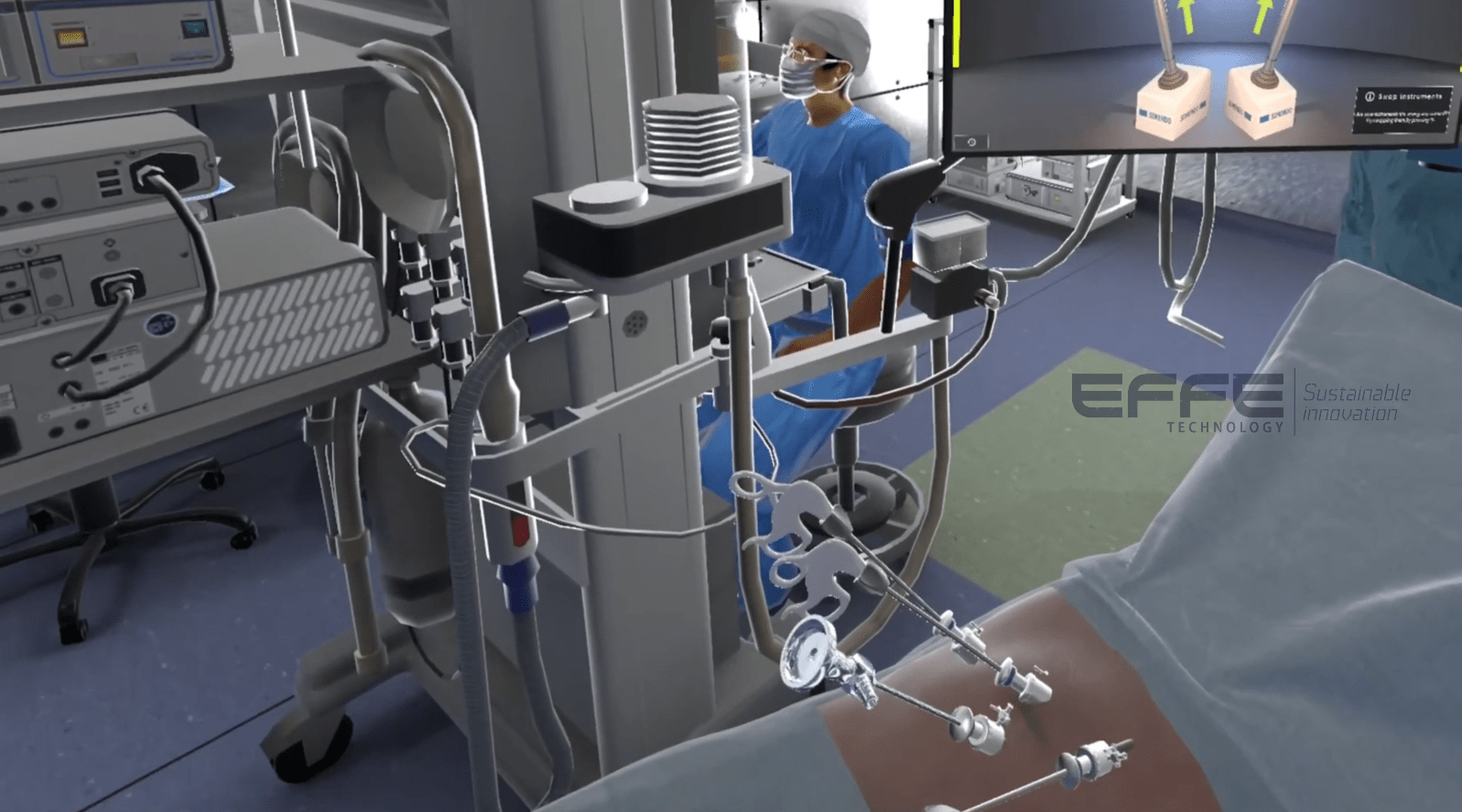
Using advanced 3D modeling, physics engines, and immersive VR frameworks, we developed a fully interactive laparoscopic surgery VR simulator that enables users to:
- Practice trocar placement, camera navigation, and instrument handling
- Perform tissue dissection, clipping, and suturing with precision
- Manage simulated bleeding and intraoperative complications
- Develop depth perception and ambidextrous coordination
- Receive instant feedback through structured VR laparoscopic training analytics
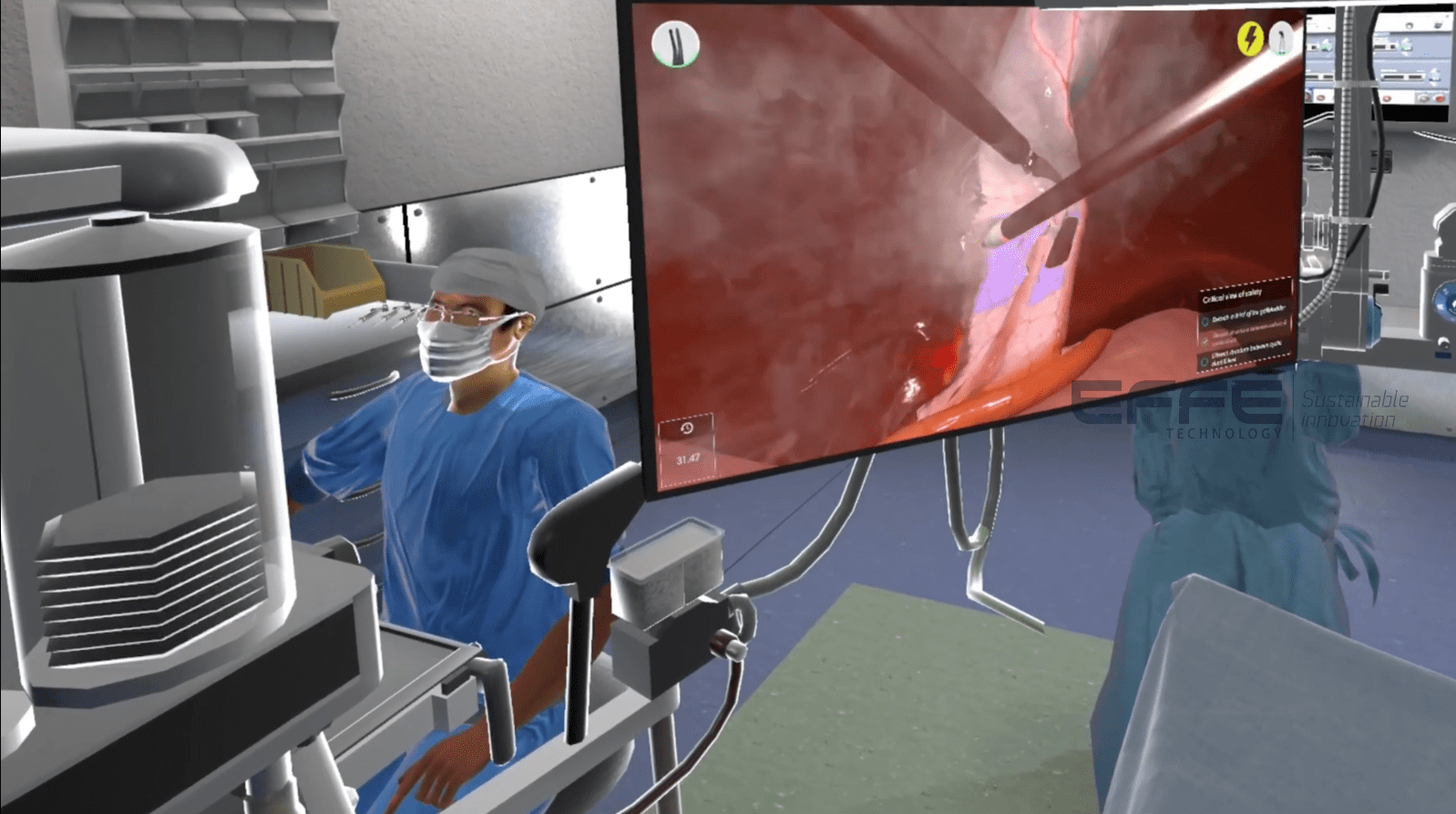
The integrated 3D environment recreates real OT scenarios with high visual and tactile realism. Embedded performance dashboards track procedure time, instrument efficiency, error rates, tissue handling, and overall skill progression, providing measurable outcomes suitable for surgical residency programs and accreditation boards.
Challenges & Learning
One of the main challenges was replicating the tactile and visual realism of laparoscopic procedures within the VR environment. Iterative refinement and surgeon validation ensured that the laparoscopic surgery simulator mirrored real-world instrument resistance and tissue dynamics.
Balancing training depth with usability was another key learning. The modules had to remain comprehensive yet intuitive for users across varying skill levels. This process reinforced our expertise as leaders in vr technology in healthcare solutions.
Client Deliverables
- Fully immersive laparoscopic surgery VR simulator
- Structured VR laparoscopic training curriculum
- High-fidelity 3D laparoscopic surgery simulation modules
- Competency-based assessment dashboards
- Multi-device compatibility for hospitals and skills labs
- Ongoing technical and clinical support
Conclusion
This advanced laparoscopic surgery VR simulator redefines minimally invasive surgical training. By combining immersive practice with objective skill tracking, it enhances surgical confidence, reduces clinical risk, and standardizes competency evaluation.
For hospitals, surgical training centers, and accreditation bodies, investing in a scalable laparoscopic surgery simulator ensures future-ready education aligned with global innovation standards in vr technology in healthcare.