
Overview
Understanding neural connectivity is critical for diagnosing and managing complex neurological disorders. However, traditional imaging reports, static brain models, and 2D diagrams often limit the ability to fully visualize functional brain circuits and pathway disruptions.
To bridge this gap, we developed an advanced neural pathway VR platform designed specifically for neurology departments, neuroscience research centers, super-specialty hospitals, and medical universities. This solution integrates anatomical precision with real-time interaction, delivering a clinically validated neural pathway VR experience that enhances diagnostic clarity and neurorehabilitation planning.
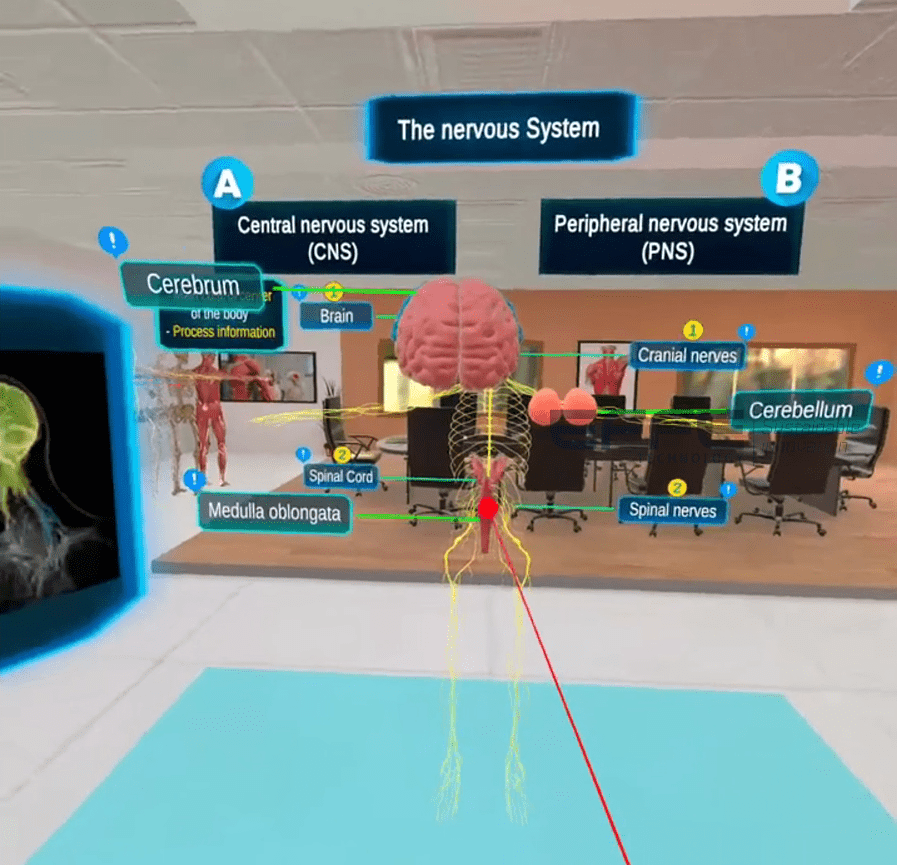
Built on a robust virtual reality central nervous system framework, the system allows neurologists, neurosurgeons, and neuroscience researchers to explore brain circuits dynamically, trace signal transmission, and simulate functional impairments in a safe, immersive environment.
Project Requirement
The client required a high-fidelity neural pathway VR system capable of:
- Visualizing complex neural circuits and inter-lobar connectivity
- Demonstrating functional disruptions caused by stroke, tumors, and trauma
- Supporting research on VR and neuroplasticity
- Enhancing rehabilitation planning through simulation-based analysis
- Aligning with global standards in virtual reality in healthcare
- Delivering scalable deployment across hospitals and academic institutions
The primary objective was to create a trusted neural pathway VR ecosystem that strengthens clinical diagnosis, neuroscience education, and therapeutic decision-making.
Project Planning
Our planning phase involved collaboration with neurologists, neurophysiologists, and cognitive neuroscience experts. We mapped real clinical cases and incorporated MRI and tractography-based pathway modeling into the neural pathway VR design.
Key planning initiatives included:
- Structuring an interactive virtual reality central nervous system environment
- Integrating white matter tract visualization and signal flow simulation
- Designing case-based modules focused on VR and neuroplasticity recovery patterns
- Ensuring compliance with evolving standards in virtual reality in healthcare
- Creating measurable assessment parameters for clinical training teams
Each neural pathway VR module underwent expert validation to ensure anatomical accuracy and functional reliability.
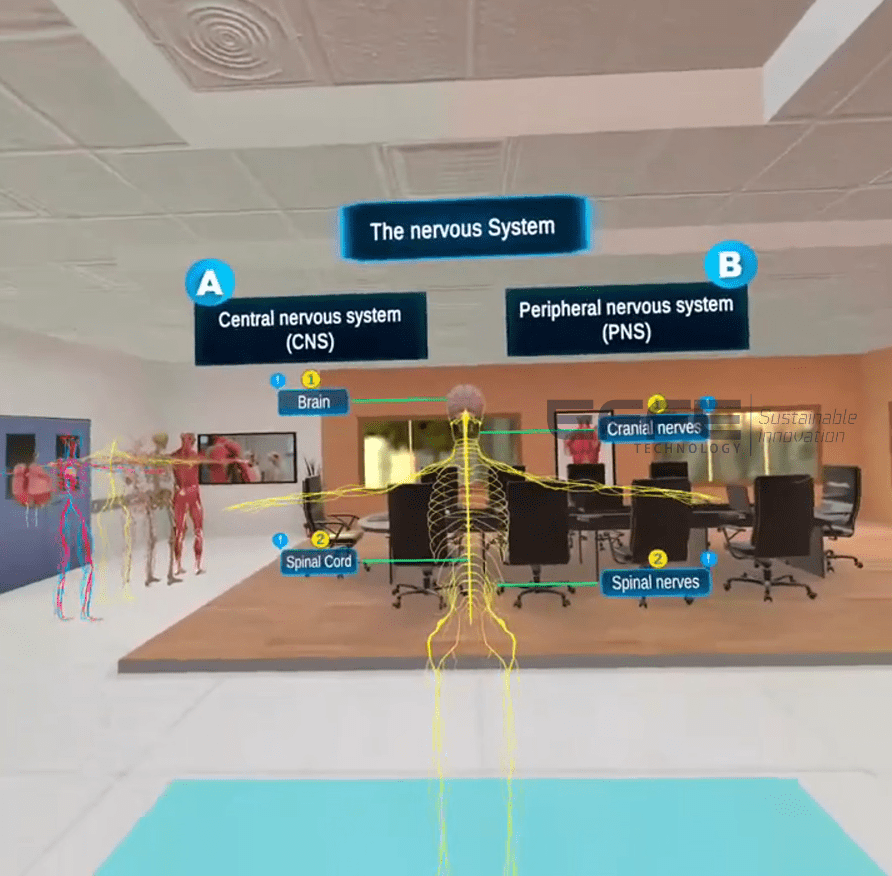
Project Process & Execution
Using advanced 3D modeling and immersive VR frameworks, we built a clinically accurate neural pathway VR platform that enables users to:
- Explore the brain in high-resolution 3D
- Trace neural impulse transmission across motor and sensory pathways
- Simulate lesion impact on specific circuits
- Analyze compensatory mechanisms linked to VR and neuroplasticity
- Evaluate rehabilitation strategies within a controlled virtual reality central nervous system environment
The system integrates real-time interaction, guided diagnostic workflows, and performance analytics. Designed in alignment with modern virtual reality in healthcare, it supports both educational and clinical training applications.
Through immersive visualization, the neural pathway VR platform simplifies complex neuroanatomy while preserving scientific depth — ensuring meaningful learning and practical application.
Challenges & Learning
One of the major challenges was accurately representing intricate white matter tracts within the neural pathway VR environment without oversimplifying neural connectivity. Multiple validation cycles with neuroscience experts ensured anatomical and functional precision.
Another key learning involved balancing research depth with usability. Incorporating principles of VR and neuroplasticity into rehabilitation-focused simulations required iterative testing and interdisciplinary collaboration.
By integrating advanced modeling within a scalable virtual reality central nervous system framework, we delivered a solution that meets the evolving expectations of virtual reality in healthcare innovation.
Client Deliverables
- Fully interactive neural pathway VR platform
- High-resolution 3D brain circuit visualization
- Case-based diagnostic and rehabilitation modules
- Integrated analytics dashboard for clinical assessment
- Multi-device compatibility for hospitals and universities
- Ongoing technical and clinical support
Conclusion
This enterprise-grade neural pathway VR system transforms how neurological circuits are studied, diagnosed, and rehabilitated. By combining anatomical accuracy with immersive simulation, it enhances clinical reasoning, strengthens research insights, and supports advanced rehabilitation strategies.
For neurology departments, neuroscience labs, and super-specialty hospitals, investing in a scalable neural pathway VR solution ensures future-ready diagnostic training aligned with global advancements in virtual reality in healthcare.