
Overview
A strong foundation in anatomy is essential for every allied health professional—from physiotherapists and radiology students to nurses and rehabilitation specialists. However, traditional textbooks and static lab models often fail to provide deep spatial understanding or repeatable hands-on exploration.
This case study highlights how we developed the Best VR Anatomy platform tailored for Allied Health Education & Training Institutes, medical universities, teaching hospitals, and rehabilitation centers. By integrating immersive Anatomy and physiology VR modules with interactive Human Anatomy VR learning experiences, we created a scalable and clinically aligned digital ecosystem.
The Best VR Anatomy solution empowers students and educators with an engaging, measurable, and highly visual approach to mastering bone structures, joint mechanics, and anatomical relationships—bridging classroom theory with practical clinical application.
Project Requirement
The client required a comprehensive Best VR Anatomy platform capable of:
- Delivering high-precision 3D skeletal visualization
- Integrating Anatomy and physiology VR concepts for functional understanding
- Supporting Human Anatomy VR learning for allied health students
- Enabling instructor-led sessions in simulation labs
- Providing structured modules for orthopedics and rehabilitation training
- Offering performance analytics for academic assessment
The primary goal was to create the Best VR Anatomy ecosystem that improves comprehension, strengthens clinical readiness, and enhances long-term retention across diverse allied health programs.
Project Planning
Our planning phase focused on curriculum alignment, institutional scalability, and measurable outcomes. We collaborated with anatomy professors, orthopedic consultants, physical therapists, and academic coordinators to ensure the Best VR Anatomy modules reflected real-world healthcare applications.
Key planning initiatives included:
- Structuring progressive Human Anatomy VR learning pathways
- Integrating Anatomy and physiology VR principles into skeletal modules
- Designing interactive bone exploration and joint mechanics simulations
- Ensuring compatibility across VR headsets and simulation labs
- Building dashboards for academic performance tracking
This strategic framework ensured the Best VR Anatomy solution could support physiotherapy, occupational therapy, radiology, nursing, and paramedical programs seamlessly.
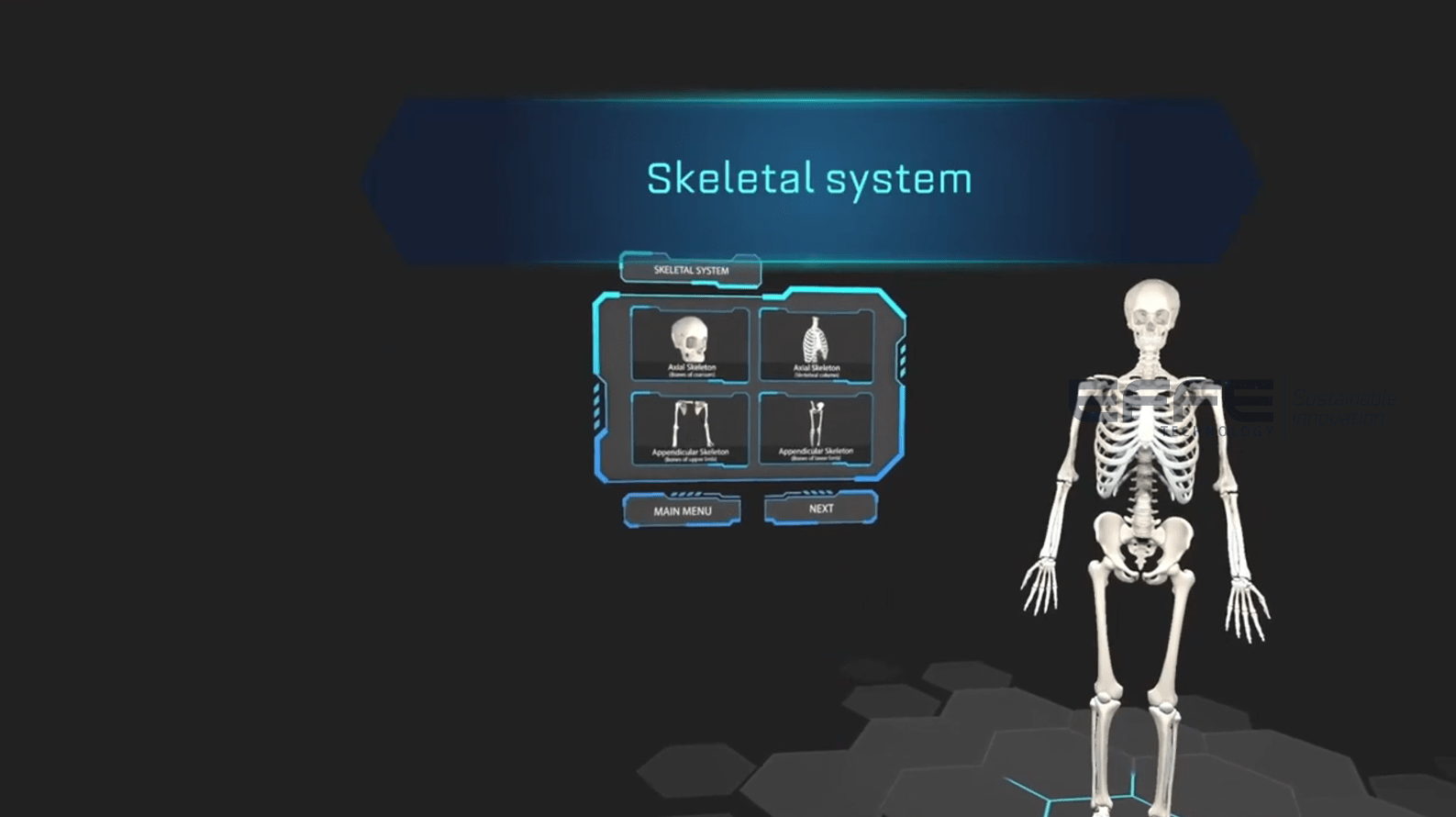
Project Process & Execution
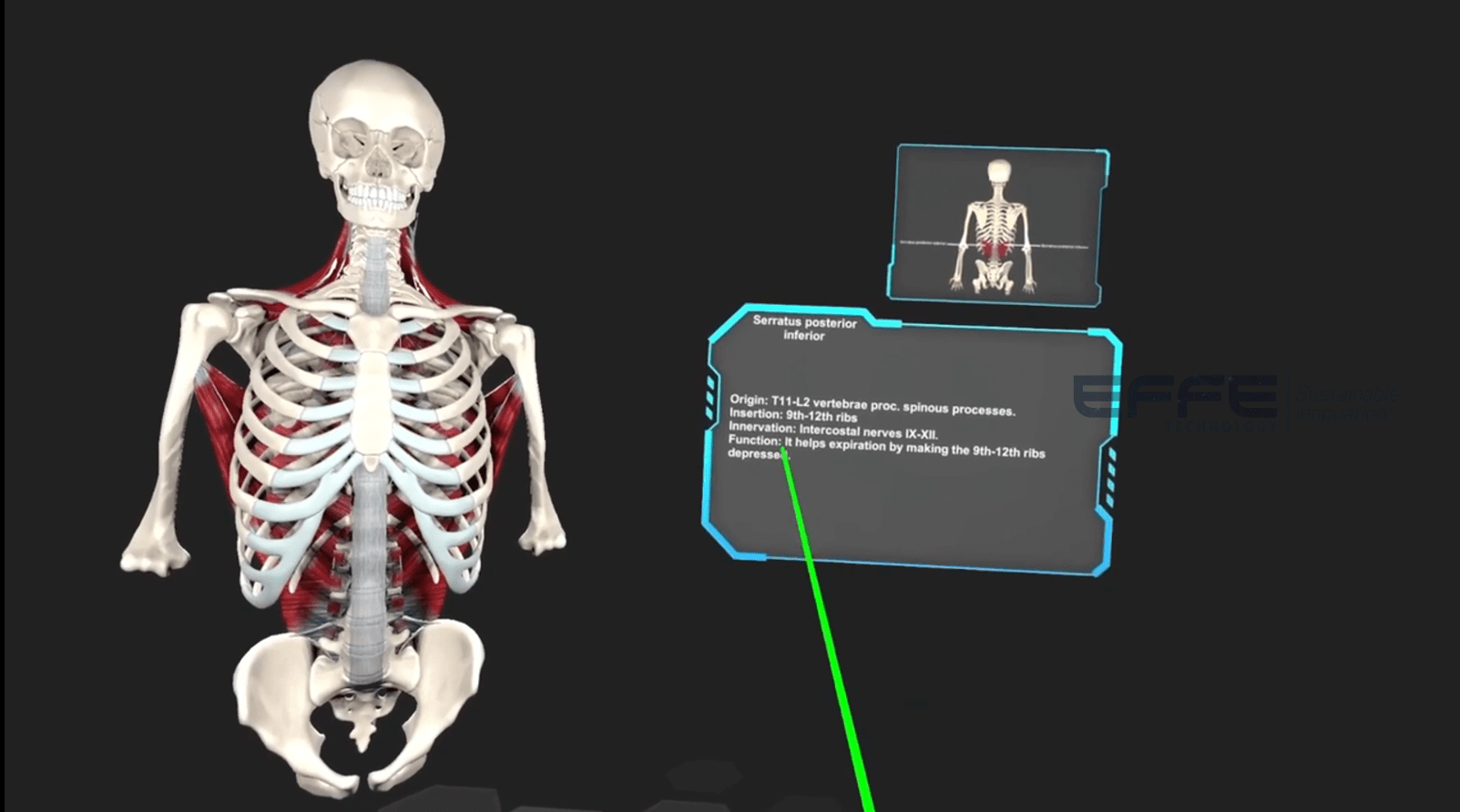
Using high-resolution CT datasets and advanced 3D reconstruction technologies, we developed a fully immersive Best VR Anatomy platform focused on bone structure exploration. Each skeletal component—from vertebral columns to distal extremities—was modeled with clinical accuracy.
Inside the platform, users can:
- Explore skeletal structures in full 360° immersion
- Engage in Anatomy and physiology VR modules explaining joint biomechanics
- Interact with layered Human Anatomy VR learning tools
- Isolate bones, analyze articulations, and study movement patterns
- Compare normal anatomy with common orthopedic injuries
- Participate in collaborative, instructor-led lab sessions
The Best VR Anatomy interface allows learners to rotate, zoom, dissect, and virtually reconstruct anatomical structures, significantly improving spatial memory. Integrated analytics track module completion, engagement time, and assessment accuracy—supporting academic deans and hospital training coordinators with measurable performance insights.
Challenges & Learning
User Diversity: The platform had to serve physiotherapy students, radiology trainees, nursing students, and orthopedic specialists—requiring adaptable Human Anatomy VR learning pathways.
Clinical Accuracy: Ensuring that Anatomy and physiology VR simulations reflected real musculoskeletal mechanics required expert validation.
Scalability: The Best VR Anatomy platform was engineered for cross-device deployment across simulation labs, classrooms, and hospital training centers.
These refinements strengthened institutional trust and ensured long-term adoption.
Client Deliverables
- Fully immersive Best VR Anatomy training platform
- Structured Anatomy and physiology VR modules
- Interactive Human Anatomy VR learning curriculum
- Bone structure and joint mechanics exploration tools
- Instructor dashboard with multi-user access
- Real-time analytics and performance tracking
- Cross-platform deployment for universities and hospitals
Conclusion
The Best VR Anatomy platform transforms allied health education by combining precision visualization with immersive interaction. Through clinically aligned Anatomy and physiology VR experiences and scalable Human Anatomy VR learning modules, institutions gain a future-ready academic solution with measurable outcomes.
For educators and administrators, it represents a strategic investment in advanced medical training. For students and clinicians, it provides safe, repeatable, and deeply engaging mastery of human anatomy—building confidence, competence, and trust through innovation.