
Overview
The aerospace industry is evolving rapidly, driven by increasing design complexity, stricter safety regulations, and the need for faster innovation cycles. Traditional engineering tools, 2D models, and siloed training systems often fail to provide teams with a holistic, real-world understanding of aircraft systems and operations. This case study showcases how XR for aerospace engineering transformed aircraft design, training, and maintenance into a unified, immersive ecosystem that supports smarter decision-making and safer operations.
By adopting XR for aerospace engineering, aerospace manufacturers, aircraft OEMs, MRO organizations, and defense aviation divisions gained immersive 3D environments where engineers, technicians, and decision-makers could collaborate in real time. Instead of relying on static drawings and disconnected platforms, teams could visualize complex aircraft systems, simulate real-world scenarios, and interact with digital aircraft models at full scale. This solution built trust by improving clarity, reducing errors, and creating confidence across the entire aircraft lifecycle.
Project Requirement
The client required a future-ready digital platform to modernize engineering workflows, improve technical training, and streamline maintenance operations. The primary objective was to build a connected ecosystem using XR for aerospace engineering that integrates design, training, and maintenance into one intelligent system.
Key requirements included:
- Immersive aircraft design visualization
- Real-time collaborative engineering environments
- Advanced XR in Aerospace Training modules for pilots, engineers, and technicians
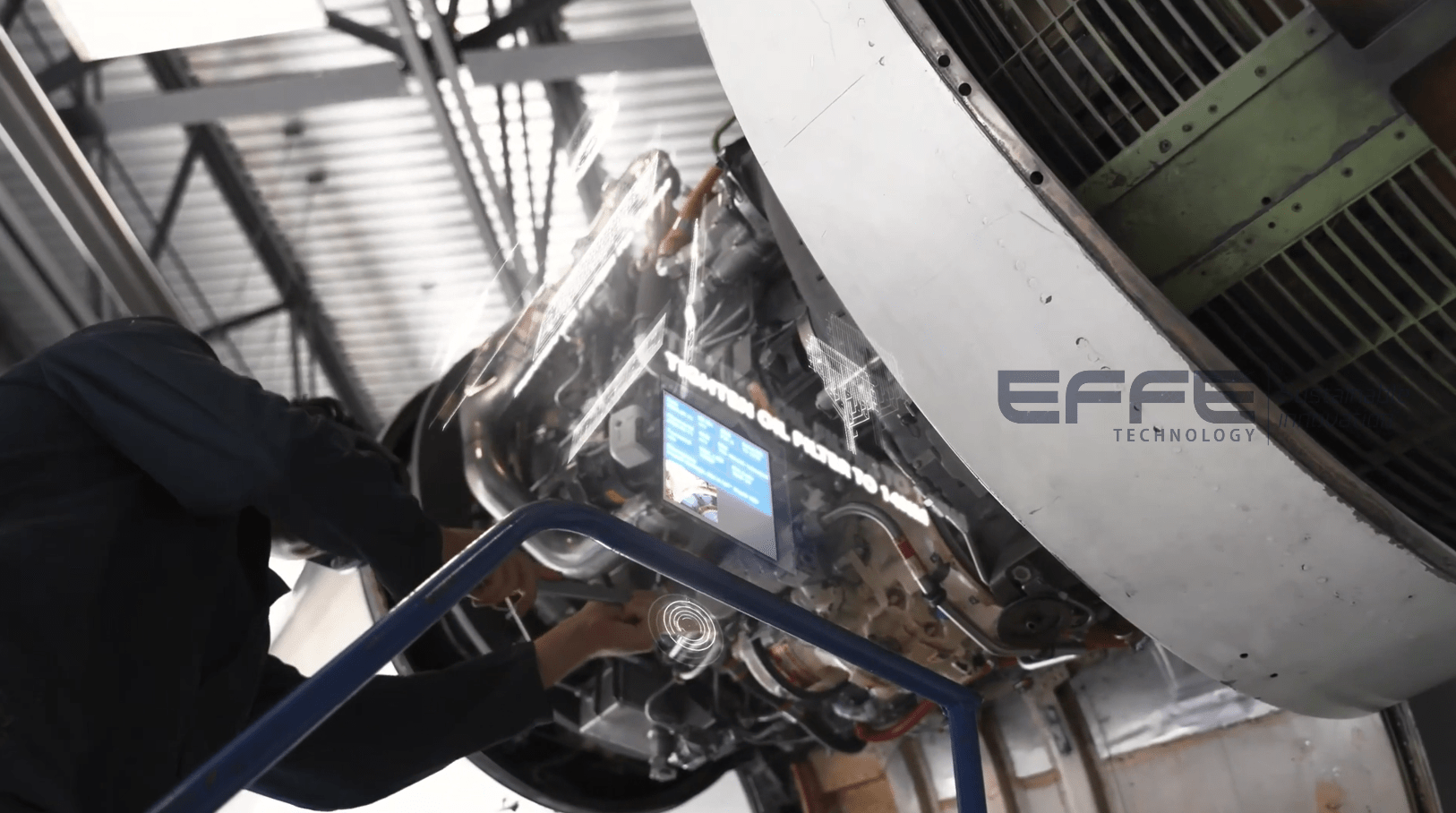
- Simulation-based XR for aircraft maintenance workflows
- Digital twin integration for aircraft systems
- Remote training and operational support
- Secure, scalable architecture for enterprise deployment
- Multi-device XR accessibility (VR, AR, MR)
Project Planning
Planning focused on aligning technology with aerospace operational realities. Our team collaborated with aerospace engineers, training leaders, MRO specialists, and digital transformation heads to design a solution that fits real-world workflows.
Key planning activities included:
- Mapping aircraft lifecycle workflows (design → training → maintenance)
- Structuring immersive environments using XR for aerospace engineering principles
- Designing learning frameworks for XR in Aerospace Training
- Creating simulation logic for XR for aircraft maintenance
- Integrating digital twin and data visualization layers
- Building scalable system architecture for future expansion
This ensured the platform was not just visually advanced, but operationally reliable and enterprise-ready.
Project Process & Execution
Execution began with building high-fidelity 3D aircraft models, system simulations, and interactive engineering environments. These were integrated into immersive XR platforms that enabled real-time interaction, training, and maintenance simulation.
Through XR for aerospace engineering, teams were able to:
- Visualize aircraft systems in immersive 3D
- Simulate complex engineering scenarios
- Collaborate across departments in virtual environments
- Train engineers and technicians using XR in Aerospace Training
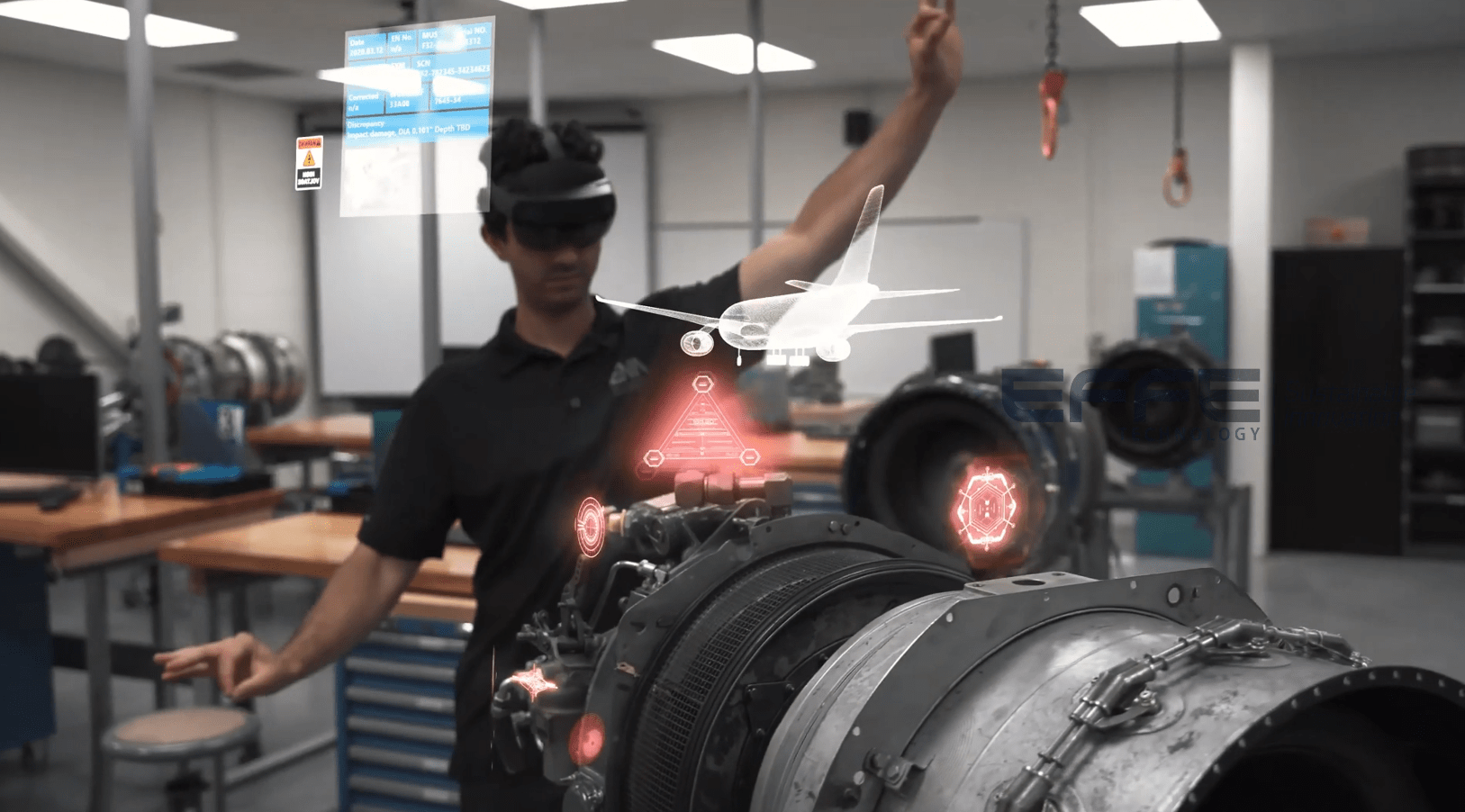
- Perform guided maintenance simulations using XR for aircraft maintenance
- Reduce dependency on physical prototypes
- Improve design validation and error detection
Engineers used XR for aerospace engineering for design validation, while training teams adopted XR in Aerospace Training for immersive learning programs. Maintenance teams used XR for aircraft maintenance to simulate inspections, repairs, and fault diagnosis before real-world execution. This created a seamless digital ecosystem that connected engineering, training, and operations into one trusted platform.
Challenges & Learning
System Complexity: Integrating multiple aerospace systems required structured architecture planning.
User Adoption: Simple, intuitive XR interfaces improved trust and usability.
Performance Optimization: High-fidelity simulations needed optimization for smooth performance.
Data Accuracy: Engineering-grade precision was essential to maintain operational trust.
Workflow Integration: The system had to support real aerospace processes, not just visualization.
These learnings strengthened the reliability, scalability, and enterprise readiness of the XR for aerospace engineering platform.
Client Deliverables
- Enterprise-grade XR for aerospace engineering platform
- Immersive aircraft design visualization system
- XR in Aerospace Training modules
- XR for aircraft maintenance simulation tools
- Digital twin integration framework
- Collaborative multi-user XR environments
- Secure enterprise deployment architecture
- Scalable aerospace innovation ecosystem
Conclusion
This case study demonstrates how XR for aerospace engineering enables a new era of smart aerospace innovation. By integrating immersive design visualization, XR in Aerospace Training, and intelligent XR for aircraft maintenance, the client achieved a connected ecosystem that improves safety, efficiency, and operational confidence. Engineers gained deeper system understanding, training teams delivered realistic learning experiences, and maintenance teams reduced risk through simulation-driven preparation.