
Overview
The automotive industry is rapidly evolving, with customers expecting more interactive, informative, and personalized experiences before making purchase decisions. This case study showcases how AR marketing for automotive industry was implemented to help an automotive brand transform traditional car showrooms into immersive digital experiences that engage customers both online and on-site.
Designed for automotive OEMs, EV manufacturers, and dealership networks, this solution demonstrates how augmented reality can bridge the gap between physical showrooms and digital engagement. By visualizing vehicles, features, and configurations through AR, the brand improved customer understanding, reduced sales friction, and strengthened trust throughout the buyer journey.
Project Requirement
The client wanted to modernize their showroom experience and marketing approach to better connect with digitally savvy customers. Static displays and brochures were no longer effective in explaining vehicle features, variants, and customization options. The key requirement was to deploy AR marketing for automotive industry use cases that could enhance both marketing and sales interactions.
The solution needed to:
- Enable interactive vehicle visualization using AR
- Showcase features, variants, and configurations clearly
- Support dealership sales teams during customer interactions
- Enhance launch campaigns and product storytelling
- Scale across multiple locations with support from an experienced AR advertising agency
The objective was to deliver a future-ready experience while aligning with existing automotive marketing workflows.
Project Planning
During the planning phase, customer touchpoints across the automotive purchase journey were analyzed. The team identified moments where AR marketing for automotive industry could add the most value—such as first impressions, feature explanations, and comparison stages.
Planning focused on:
- Designing intuitive AR interactions for showroom and mobile use
- Aligning AR experiences with brand identity and messaging
- Supporting both B2C and AR marketing for B2B companies use cases
- Ensuring seamless integration into dealership environments
- Creating reusable AR assets for long-term marketing value
This structured planning ensured the solution was practical, engaging, and easy to adopt.
Project Process & Execution
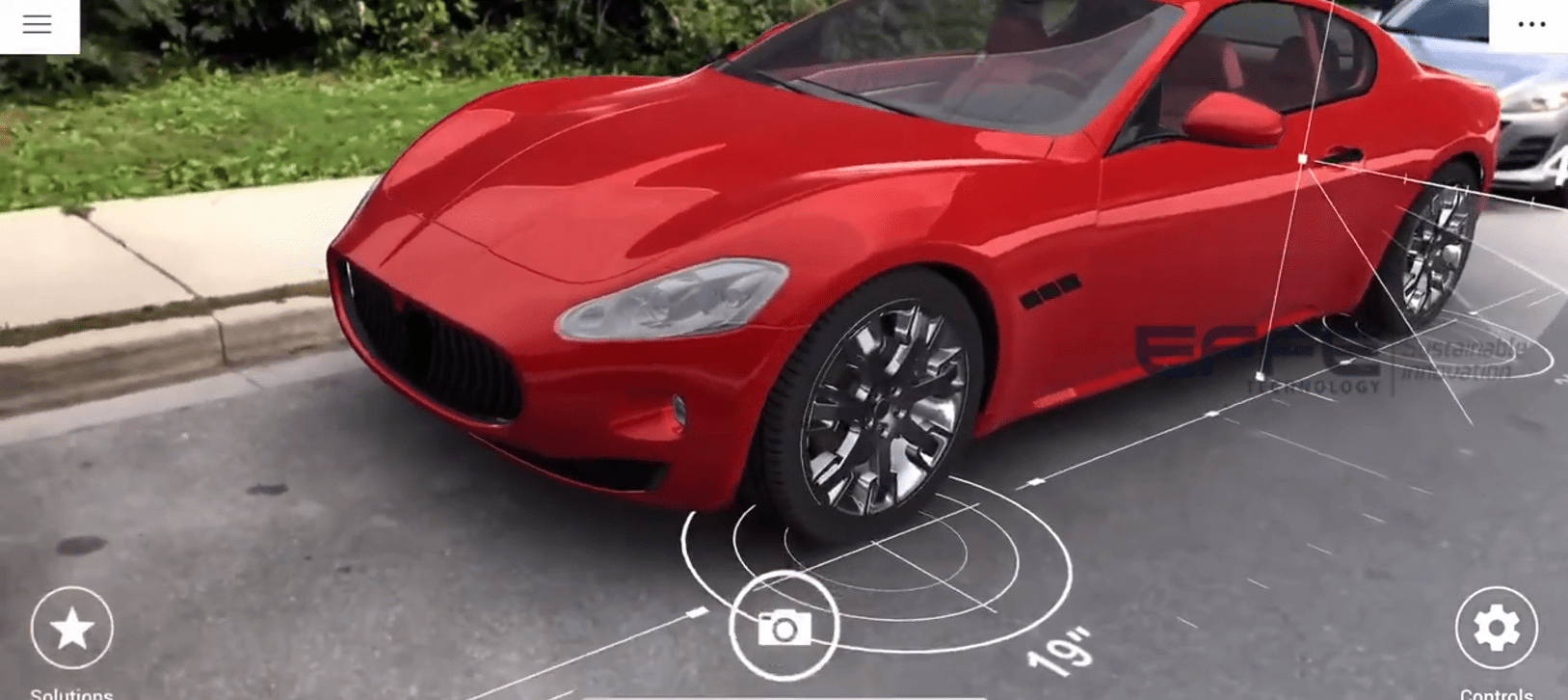
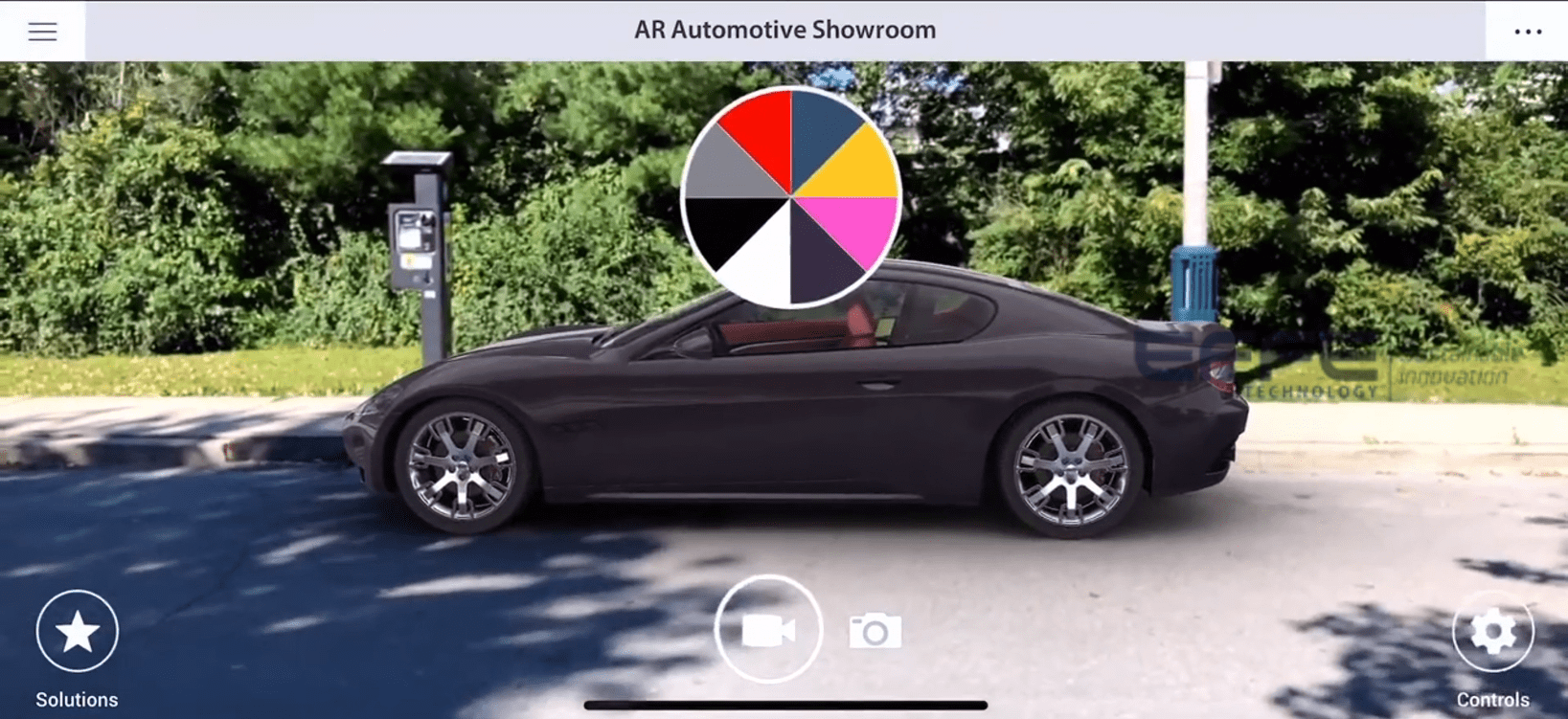
Execution began with converting detailed vehicle CAD and design data into AR-optimized 3D assets. Using AR marketing for automotive industry, customers could explore vehicles in real scale, view interiors, and interact with features through guided AR experiences.
Key execution elements included:
- Realistic AR vehicle visualization and animations
- Interactive feature highlights and customization views
- Mobile and tablet compatibility for sales teams
- Integration with marketing campaigns and product launches
As a professional AR advertising agency, the team ensured performance, accuracy, and visual quality across devices. The experience also supported AR marketing for B2B companies, enabling fleet buyers and partners to understand vehicle specifications and configurations more effectively.
Challenges & Learning
One challenge was maintaining visual accuracy while optimizing performance for in-store devices. Early asset optimization proved essential for scalable AR marketing for automotive industry solutions. Another challenge was designing experiences that worked equally well for customers and sales teams.
Key learnings included:
- Simpler interactions drive higher engagement
- AR improves feature understanding and buyer confidence
- AR marketing for B2B companies benefits from data-rich visual storytelling
- A structured approach from an experienced AR advertising agency ensures smoother adoption
These learnings strengthened the final solution and improved campaign effectiveness.
Client Deliverables
- Interactive AR vehicle visualization experiences
- AR-ready 3D vehicle assets optimized for marketing and sales
- Scalable AR frameworks for future launches
- Visual marketing content for digital and showroom use
- Deployment-ready AR solution for multiple locations
Conclusion
This case study demonstrates how AR marketing for automotive industry can redefine showroom experiences and automotive marketing strategies. By combining immersive visualization with practical deployment, the brand delivered clearer communication, stronger engagement, and improved buyer confidence.
For automotive brands seeking innovation, working with a skilled AR advertising agency enables scalable, impactful solutions. With growing demand for interactive experiences, AR marketing for B2B companies and consumer-facing campaigns alike will continue to shape the future of automotive marketing and retail.